Finding the right youth indoor basketball helps young players build confidence, improve ball handling, and practice key skills on clean indoor courts. This guide highlights well-rounded options designed for practice, technique development, and reliable grip on indoor surfaces. Each pick balances grip, durability, and appropriate size for ages 8–12. A quick summary table below lists the featured products and their target sizes for fast reference.
| Product | Brand | Size | Notes |
|---|---|---|---|
| Spalding Rookie Gear Youth Indoor-Outdoor Basketball | Spalding | Size 5 (27.5″) | Performance composite, lighter weight for technique |
| AND1 Fantom Graffiti Rubber Basketball | AND1 | Size 5 (27.5″) | Indoor/outdoor versatility, deep channel grip |
| Champion Sports Rubber Junior Basketball | Champion Sports | Size 5 | Rugged rubber, ideal for education settings and casual play |
| Wilson NCAA Legend Basketball | WILSON | Size 5 (27.5″) | Deeper grip channels, school/team-inspired styling |
| Wilson NBA Forge Indoor/Outdoor Basketball | WILSON | Size 5 (27.5″) | Dual-depth grip, pro-like feel for progression |
Spalding Rookie Gear Youth Indoor-Outdoor Basketball
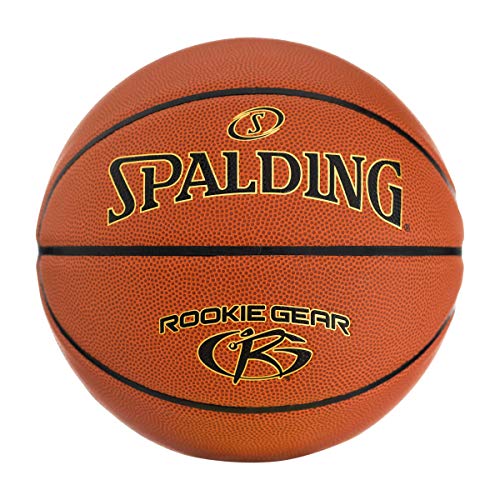
Spalding’s Rookie Gear is tailored for younger players learning dribbling and passing on indoor or outdoor courts. The size 5 (27.5″) is commonly recommended for ages 8–12, and the performance composite cover reduces wear while offering reliable grip. The 15% lighter weight supports developing technique without sacrificing ball control.
AND1 Fantom Graffiti Rubber Basketball

The AND1 Fantom Graffiti model is sized for youth at 27.5 inches and made with a durable rubber cover. Its deep channel construction helps players grip the ball more securely for dribbling and shooting. This option supports both indoor play and quick outdoor sessions, with a palm-friendly feel that suits developing players.
Champion Sports Rubber Junior Basketball

This Champion Sports junior basketball uses a rubber composite cover and a 2-Ply butyl bladder to balance true bounce with wear resistance. It’s designed for versatile indoor/outdoor use and is well-suited for classroom gyms, practice drills, and family games. The durable build stands up to frequent use on various surfaces.
Wilson NCAA Legend Basketball (Size 5)

The Wilson NCAA Legend, a size 5 option, emphasizes an innovative grip with deeper rubber channels for improved control on passes and shots. Its colorway and branding align with NCAA-inspired aesthetics, while the deeper channels help youth players develop a confident feel for ball handling during drills and small-sided games.
Wilson NBA Forge Indoor/Outdoor Basketball (Size 5)

Wilson’s NBA Forge combines a dual-depth technology with a Pro-level PureFeel cover to deliver a durable, comfortable grip on a variety of indoor and outdoor surfaces. The size 5 format supports youth development with a responsive feel that’s conducive to drills, handling progression, and game-like practice scenarios.
Buying Guide
Key purchase considerations for youth indoor basketballs focus on size, material, grip, durability, and intended use. For most players aged 8–12, a size 5 (27.5 inches) is the standard starting point, especially for dribbling and ball control.
- Size and age suitability: Size 5 is commonly recommended for younger players; larger balls hinder dribbling accuracy in early stages.
- Material: A performance composite or rubber cover balances grip and wear resistance. Composite is typically smoother and durable; rubber can be tougher and more affordable for rough surfaces.
- Grip and channels: Deeper channels improve fingertip grip and ball feel, aiding passes and shots during drills and games.
- Durability: Look for a ball with a strong bladder and multi-ply casing for air retention and longevity under frequent use.
- Surface compatibility: Indoor-only balls may outperform outdoor models on hardwood, but many youth balls are designed to handle both surfaces for flexibility.
- Brand and model variety: Reputable brands often provide consistent performance and availability of replacement parts, such as pumps and needles.
When choosing, consider the player’s position, practice emphasis (dribbling, shooting, or passing), and the environment (school gym, home court, or outdoor courts). For beginners, starting with a lighter, size-5 ball can help build confidence before upgrading to more advanced textures and grip features as skills mature. Ensure proper inflation to the recommended pressure to maintain a true bounce and prolong ball life.
Add a Comment