For riders seeking reliable, interference-free performance, wired cycle computers remain a trusted choice. This article highlights five top wired models, focusing on accuracy, durability, and ease of use across road, mountain, and gravel setups.
| Product | Brand | Key Features | Typical Use |
|---|---|---|---|
| CATEYE Wired Bike Computer – Entry-Level | CATEYE | Current/Max/Average speed, total distance, trip distance, elapsed time, auto-stop, 3-year battery life | Road, MTB, Gravel |
| Hilceriy Bike Computer | Hilceriy | Speed, average/max, distance, calories, backlight, IPX6 waterproof | All-weather riding |
| CATEYE Enduro Wired Bike Computer | CATEYE | Durable wire, wide stat set including calories and carbon offset, front-facing single button | Trail and off-road |
| CATEYE Velo 9 | CATEYE | Calories, carbon offset, auto-stop, simple front-button navigation | General cycling |
| Planet Bike Protégé 9.0 Wired | Planet Bike | 4-line display, temperature readout, easy-to-read data | Training and touring |
CATEYE Wired Bike Computer – Entry-Level

This entry-level CATEYE model offers essential cycling metrics with reliable wired sensing for accurate speed readings. It displays current, max, and average speed, total distance, trip distance, elapsed time, pace arrow, and clock. The device automatically stops time and averaging when you pause at red lights or stops, ensuring you aren’t penalized for brief stops. A wired speed sensor delivers interference-free performance, making it a strong option for road, MTB, and gravel bikes. The unit is built for durability with a straightforward setup process.
CATEYE Enduro Wired Bike Computer

Designed for trail riding, the Enduro features a heavy-duty wire that stands up to off-road use while delivering a comprehensive stat set. You’ll see current, max, and average speed, total distance, trip distance, elapsed time, calories, carbon offset, pace arrow, and a clock. Its front-facing single button enables quick toggling through functions, allowing riders to stay focused on the ride rather than menu navigation. The rugged wiring and display provide dependable performance across varied terrains.
CATEYE Velo 9 Wired Bike Computer

This model emphasizes ease of use with a simple interface and automatic stop features when you pause. It tracks all standard metrics—current, max, and average speed, total distance, trip distance, elapsed time, pace arrow, and clock—and adds calorie tracking and carbon offset data. The unit’s design accounts for quick setup and straightforward operation, helping riders stay focused on their route rather than fiddling with the device.
Planet Bike Protégé 9.0 Wired
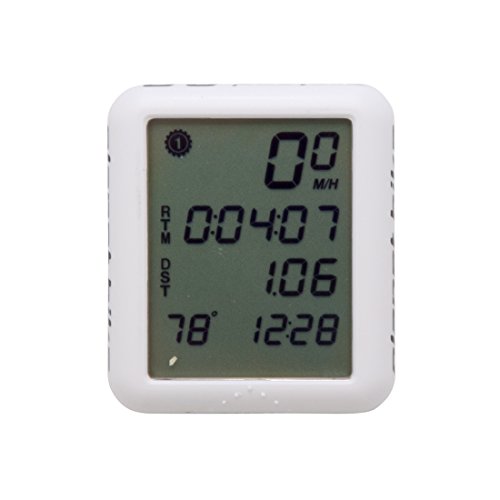
Planet Bike’s Protégé 9.0 uses a wired design and a buttonless, straightforward display. Its 4-line readout packs five data points at a glance, including temperature, which adds a helpful dimension for riders training in varied climates. The unit presents data in a clear layout and can be positioned forward in the bracket to reveal more information as needed, making it a practical choice for serious training tours and daily commuting alike.
Bike Computer Wired With Touch Sensor And Backlight

This wired model emphasizes practical features like a large digital LCD screen, IPX6 waterproofing, and a touch sensor switch for easy operation. It tracks speed, distance, riding time, and calories, while the automatic wake-up function ensures the device is ready whenever you are. Its compatibility with a wide range of road, mountain, and folding bikes makes it a versatile option for riders who want dependable data across diverse riding conditions.
Buying Guide
- Wired versus wireless: Wired sensors are generally more reliable in areas with radio interference or dense environments, though they require careful cable routing during installation.
- Display and readability: Look for a clear, high-contrast display and backlighting for nighttime riding. Four to five data points on a single screen can reduce menu navigation during rides.
- Durability and weather resistance: Waterproof or IP-rated models help ensure accuracy in rain or snow. Off-road and commuter riders should prioritize rugged housings.
- Battery considerations: Wired models typically use long-lasting coin cells or standard batteries; check battery life expectations and replacement availability.
- Installation compatibility: Ensure the unit fits your bike’s handlebars and bracket system. Some models offer FlexTight or quick-mount brackets for easier positioning.
- Data scope: If calories, carbon offset, or temperature are important, choose a model that explicitly lists these metrics. For basic training, a simpler display may suffice.
- Ease of use: Front-facing buttons or single-button navigation helps minimize distraction on the road. Consider whether you prefer a single data screen or a multi-line display.
- Intended use: Road, MTB, or gravel riders may prioritize durability and fast access to essential stats, while training-focused riders may want richer data options.
- Upgrade path: Some models offer odometer retention when changing batteries or batteries that last multiple years; consider future-proof features if you plan long-term use.
All five selections provide reliable performance with distinct strengths, from simple, user-friendly interfaces to feature-rich displays for serious training. When choosing, align the model with your riding style, desired metrics, and installation preferences to maximize data utility on every ride.
Add a Comment