Finding the right swing speed monitor helps golfers of all levels measure club head speed, ball speed, and related metrics to fine-tune technique. Below are five highly regarded models that emphasize Doppler radar accuracy, portability, and real-time feedback. The recommended picks cover budget-friendly options and feature-rich devices designed for home practice, driving ranges, and on-course feedback. Use this guide to compare performance, compatibility, and form factors to match your practice goals.
| Product | Brand | Key Strength |
|---|---|---|
| PRGR HS 130-A Portable Golf Launch Monitor | PRGR | Affordable, no-app setup, memory for past swings |
| Voice Caddie SC300 Portable Launch Monitor | Voice Caddie | Real-time data with Doppler radar and extended battery |
| Swing Speed Radar | Swing Speed Radar | Simple, immediate speed readings without ball hits |
| Voice Caddie SC200Plus | Voice Caddie | Real-time feedback with voice output and Doppler radar |
| Garmin Approach R10 | Garmin | Integrated training metrics with app-based analysis |
PRGR HS 130-A Portable Golf Launch Monitor

The PRGR HS 130-A uses advanced Doppler radar to measure club head speed (with or without a ball), ball speed, smash factor, and total and carry distance. Its design emphasizes affordability while delivering data comparable to more expensive units. It requires no Wi-Fi or Bluetooth and runs on AAA batteries, supporting quick setup on the range or at home. The device stores up to 500 past swings, enabling continued performance tracking over time and easy comparison between practice sessions.
Key data points include club head speed, ball speed, smash factor, and distance metrics. The compact form factor makes it easy to travel with, so you can practice indoors or outdoors without heavy equipment. While it lacks some app-based features, the simple readouts provide actionable feedback suitable for reinforcing consistent swing mechanics and tempo.
Voice Caddie SC300 Portable Golf Launch Monitor

The SC300 uses Doppler radar to measure swing speed, ball speed, carry and total distance, smash factor, launch angle, apex, and even spin in its companion app. It emphasizes real-time data with enhanced shot analysis for both home practice and outdoor sessions. The device provides +/- 3% ball speed accuracy in target mode and +/- 3 yards of carry in target mode, with slightly broader tolerance in practice mode, which helps players gauge improvements in distance and consistency.
With a robust data suite, the SC300 is well-suited for players seeking a comprehensive picture of swing dynamics. Its portability, straightforward measurements, and reliable data collection make it a practical choice for daily practice and on-course training. Users can compare outcomes across sessions to identify tempo and swing path adjustments that translate to better dispersion and efficiency.
Swing Speed Radar

With a simple, reliable interface, the Swing Speed Radar delivers precise club swing speeds from 20 to over 200 MPH. This model emphasizes ease of use: power on, swing, and view your speed instantly. It supports ball-less practice, using a wiffle ball, Birdie Ball, or sponge ball to simulate impact, enabling quick feedback without frequent ball contact. A long-standing favorite for its straightforward feedback, the unit is designed to help golfers focus on swing mechanics while tracking incremental speed gains that correlate with distance improvements.
Designed for quick checks and repeatable practice, its data is ideal for golfers who want immediate reinforcement of tempo and acceleration throughout the swing. While it lacks some high-tech analytics, it remains a practical tool for speed-centric training and consistent measurements across sessions.
Voice Caddie SC200Plus Portable Launch Monitor

The SC200Plus adds an all-new swing speed mode, enabling users to train speed and tempo indoors with no ball required. Doppler radar technology, paired with atmospheric pressure sensors, enhances data reliability for various environments. Real-time feedback is delivered via an LCD display and voice output, making it easier to translate data into actionable swing adjustments during practice sessions and on the range. This model is well-suited for players who want continuous feedback without disrupting the flow of practice.
Compared to other monitors, the SC200Plus prioritizes ease of interpretation and audible cues, which can help players maintain focus and rhythm. The device supports quick checks of practice swings and provides a clear path for applying technique changes to increase swing speed consistently and safely.
Garmin Approach R10
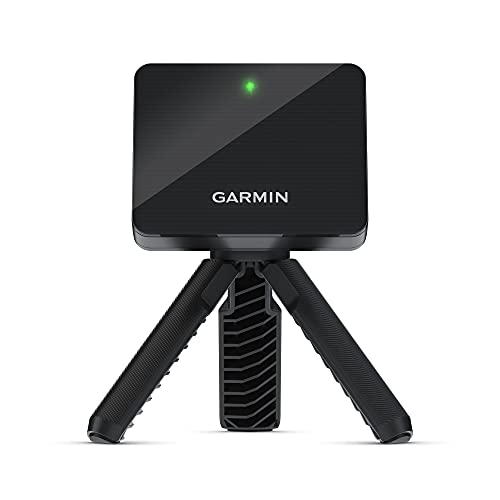
The Garmin Approach R10 is a portable launch monitor designed for indoor and outdoor practice, compatible with the Garmin Golf app for expanded training insights. It reports club head speed, ball speed, launch angle, and dispersion when paired with the app, helping players build a data-driven understanding of performance. Garmin emphasizes training mode features and shot dispersion charts to identify strengths and weaknesses per club, enabling targeted improvements over time. The R10 supports up to 10 hours of battery life, and its waterproof design (IPX7) ensures reliability across practice conditions.
For golfers who value ecosystem integration, the R10 offers seamless syncing with Garmin’s platform, facilitating ongoing progress tracking. While it may rely on the app for full data visualization, the combination of hardware accuracy and software analytics makes it a strong choice for disciplined practice routines and comprehensive improvement plans.
Buying Guide: Key Purchase Considerations
- Accuracy and measurement scope: Look for devices that report club head speed, ball speed, carry distance, total distance, and launch angle. Doppler radar tends to offer robust performance across environments, while some models focus on essential swing speed data.
- Ease of use vs. data depth: If you want quick feedback, consider devices with simple readouts or voice feedback. For deeper analysis, prioritize units with apps, graphs, and club-by-club statistics.
- Indoor vs. outdoor use: Indoor training benefits from compact size and indoor-suitable displays. Outdoor practice may require glare resistance and weather resistance; battery life is crucial for long sessions on the range.
- Battery life and power source: Some models run on replaceable AAA batteries, while others offer rechargeable batteries with multi-hour life. Ensure your choice fits your typical practice schedule.
- App integration and data sharing: Apps can provide richer analytics, save swing histories, and compare changes across sessions. Consider whether you prefer standalone devices or ecosystem-based training.
- No-ball training vs. ball-required modes: Ball-free modes let you practice tempo and swing mechanics indoors. Ball-required modes are ideal for distance measurements and carry analysis on the range.
- Portability and setup speed: For frequent travelers or on-the-go practice, lighter devices with quick setup are advantageous. Consider the ease of mounting, if applicable, and the size of the display.
- Reliability and brand support: Well-known brands tend to provide robust firmware updates, customer service, and accessible spare parts or accessories.
When choosing among these options, map your goals to the core metrics you need: entry-level swing speed feedback, in-depth distance and launch data, or integrated training plans. Consider starting with a cheaper model to establish your baseline, then upgrade to a sensor with richer analytics if you want to accelerate performance gains. Always verify compatibility with your preferred mobile device and the app ecosystem before purchase.
Add a Comment