Finding a reliable speed monitor helps you track performance, distance, and cadence across riding styles—from road to trail. This guide highlights five strong options, covering wireless and wired sensors, GPS-enabled cyclists, and compatibility with popular apps and devices. Each picks up speed, cadence, or both, and works with major platforms like Garmin, Zwift, Strava, and OpenRider. Read on to compare features, compatibility, and value to choose the best speed monitor for your bike.
| Product | Type | Connectivity | Best For |
|---|---|---|---|
| Magene S3+ | Speed/Cadence Sensor | Bluetooth/ANT+ | Multi-device testing (speed or cadence) |
| Garmin Bike Speed 2 & Cadence 2 Sensor | Speed & Cadence Sensors | ANT+/Bluetooth LE | Garmin ecosystems and training apps |
| CooSpo BC107 & BK467 | GPS Bike Computer + Sensor | Bluetooth/ANT+ | GPS tracking with app integration |
| Hilceriy Wired Bike Speedometer | Wired Speedometer/Odometer | Wired | All-weather cycling data |
| GEOID CS600 | Cadence/Speed Sensor | Bluetooth/ANT+ | Broad app compatibility |
Across these picks, consider how you ride (road vs. MTB), the ecosystem you use (Garmin, Zwift, Strava, Onelap, Wahoo), and whether you prefer wireless convenience or a wired, weather-resistant setup. The following sections detail five top options with practical highlights and what to expect in real-world use.
Magene S3+ Outdoor/Indoor Sensor
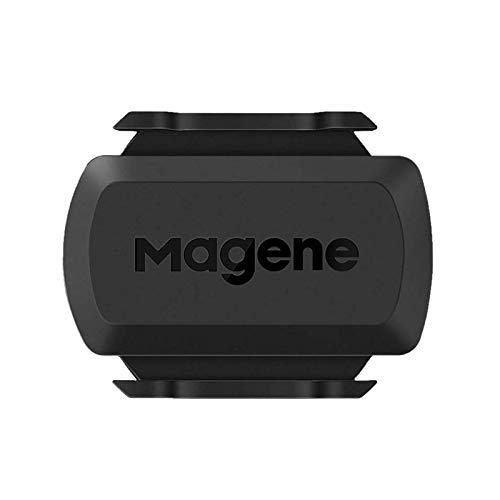
The Magene S3+ is a dual-purpose sensor designed for both speed and cadence measurements. It supports Bluetooth and ANT+ connections, enabling compatibility with popular bike computers and apps. The device is suitable for road bikes and spinning bikes, and can pair with platforms like Onelap, Wahoo Fitness, and Zwift. Note that each sensor can be set to only one mode at a time, so users testing both speed and cadence may opt for two sensors. Bluetooth connections are typically single-device, while ANT+ supports multi-device connections.
Garmin Bike Speed 2 & Cadence 2 Sensor

The Garmin Speed 2 and Cadence 2 sensors attach to the hub and crank, respectively, and integrate with Garmin Edge devices or other compatible Garmin units. They offer self-calibration, Bluetooth Low Energy, and ANT+ for live data transmission to training apps and displays. This setup is ideal for users already invested in the Garmin ecosystem seeking seamless training data synchronization.
COOSPO BC107 GPS Cycling Computer & BK467 Sensor

The COOSPO bundle combines a GPS cycling computer with a BK467 cadence/speed sensor. It features ANT+ and Bluetooth 4.0, enabling wireless data transfer to compatible bike computers and cycling apps. The GPS component helps track routes, Strava syncing, and overall performance, providing a reliable all-in-one solution for riders wanting precise GPS data alongside speed or cadence metrics.
Hilceriy Wired Bike Speedometer

The Hilceriy wired speedometer offers a multi-function display with speed, distance, ride time, and calories statistics. It includes a day/night backlight for visibility in low light, IPX6 waterproofing for all-weather operation, and a compact form factor suitable for road and mountain bikes. The wired design reduces potential wireless interference and battery management concerns.
GEOID CS600 Cadence/Speed Sensor

The GEOID CS600 provides cadence and speed data with Bluetooth and ANT+ compatibility. It supports connection to ANT+ cycling computers, smartwatches, and third-party apps like Onelap, Zwift, Rouvy, Peloton, and others. It also features a sleep mode to conserve battery when stationary and wakes up when movement resumes, optimizing power use for longer rides.
Buying Guide: Key Purchase Considerations
- Compatibility: Check which devices and apps you use (Garmin, Zwift, Strava, Onelap, Wahoo). Ensure the sensor supports ANT+, Bluetooth, or both as needed.
- Connectivity: Wireless sensors offer convenience, but some riders prefer wired units for reliability in wet conditions. Consider your typical riding environment (rain, mud, splash risk).
- Single vs. multi-mode: Some sensors operate in one mode (speed or cadence) per unit, requiring multiple sensors for full data. If you want both metrics from a single device, look for dual-mode or bundles.
- GPS integration: If route tracking and auto-sync with GPS apps are important, choose a GPS-enabled computer like the COOSPO bundle or a system that pairs with GPS computers.
- Power and battery life: Wireless sensors rely on batteries; check expected life and ease of replacement. Wired units avoid battery management but require proper cable routing and protection.
- Weather resistance: IPX ratings indicate water tolerance. For all-season riding, prioritize IPX6 or better and robust housings.
- Expandability: If you ride with multiple devices, ensure the sensor supports simultaneous connections across apps without data conflicts.
- Price-to-value: Compare features such as backlight, auto-start/stop, data fields, and app integration to determine the best value for your setup.
When selecting a speed monitor, align the choice with your training goals, preferred ecosystem, and riding style. The five options above cover a range from simple wired models to GPS-enabled bundles and multi-sensor setups, offering reliable data streams for performance tracking and training analysis.
Add a Comment