Choosing the right insole for low arches can improve stability, reduce fatigue, and help prevent injuries during runs. Below, you’ll find five top-rated insoles designed to provide low-arch support, along with a concise buying guide to help you compare features, fit, and performance. The selections emphasize arch stabilization, cushioning, and durability to support everyday training and longer runs.
| Product | Brand | Arch Type | Key Benefit |
|---|---|---|---|
| SOPROM Running Shoes Insoles | SOPROM | Low to High (adjustable via trim) | Deep heel cup, high-rebound cushioning, trim-to-fit for a customized fit |
| CURREx RunPro Insoles | currex | Low | 3D Dynamic Arch Technology, zero heel drop, easy folding at flex points |
| Superfeet Run Cushion Low Arch Insoles | Superfeet | Low | Adaptive Comfort Technology, durable arch support, trim-to-fit |
| Dr. Scholl’s Stability Support Insoles | Dr. Scholl’s | Low | Motion control stabilizing shell, improved balance and alignment |
| PowerStep Pinnacle Low Insoles | PowerStep | Low | Firm yet flexible arch support, deep heel cradle, all-day comfort |
SOPROM Insoles: Customizable Arch Support

The SOPROM insoles offer a trim-to-fit design that accommodates low, medium, and high arch heights, with a deep heel cup to stabilize the foot and promote proper alignment. The insoles feature high-rebound padding to deliver propulsion with each stride while cushioning impact and reducing strain on the feet, knees, and joints. Their flexible forefoot and heel areas support varied running motions, making them suitable for runners who need adjustable arch support tailored to their shoe type and gait.
CURREx RunPro Insoles: Dynamic Arch Support
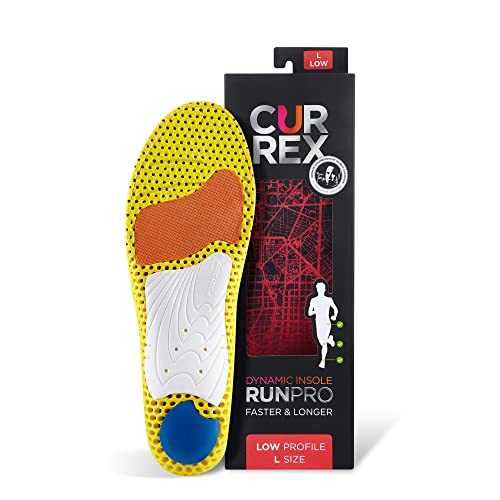
CURREx RunPro insoles feature 3D Dynamic Arch Technology with multiprofile, low-to-high arch support options. They provide flexible heel-to-toe cushioning, a deep decoupled heel cup for stability, and a zero-heel-drop design that fits a wide range of running shoes. The insoles are designed to reduce fatigue, improve stability, and boost propulsion, while allowing trimming for a precise fit. The emphasis is on dynamic support that stays aligned with foot movement across runs and workouts.
Superfeet Run Cushion Low Arch Insoles

Superfeet Run Cushion insoles are trim-to-fit, designed specifically for low arches. They use patented Adaptive Comfort Technology to flex with the foot and provide stable heel-to-toe turnover. The durable arch support supports the foot’s natural movement, helping to reduce fatigue during long runs or daily activities. The cut-to-fit instructions allow you to tailor the fit to your shoe size and running style, ensuring consistent support and comfort.
Dr. Scholl’s Stability Support Insoles

Dr. Scholl’s Stability Support insoles are engineered for low arches and overpronation, delivering improved stability and balance. The motion control stabilizing shell helps align the ankle and feet, potentially easing pain radiating up the legs. They offer durable arch support with flexible construction, helping distribute weight more evenly and support proper posture during daily activities and runs alike.
PowerStep Pinnacle Low Insoles

PowerStep Pinnacle Low insoles provide firm but flexible arch support with a deep heel cradle. They are designed to align the feet, reduce pronation, and offer all-day comfort. The dual-layer cushioning delivers ongoing comfort from heel to toe, making them suitable for runners and walkers who require reliable support for flat feet or low arches while maintaining natural movement and stability.
Buying Guide: Key Considerations For Low Arches
- Arch Type And Fit: Look for insoles labeled specifically for low arches or flat feet. Many models offer trim-to-fit options, so measure shoe size and arch height, then cut to the recommended lines for a snug, stable fit.
- Stability Versus Cushioning: For low arches, stability features (deep heel cups, supportive arches, and motion control elements) often matter more than soft cushioning alone. Balance cushioning with arch support to avoid heel strike or overpronation.
- Heel Cup And Heel Stability: A secure heel cup helps lock the foot in place, reducing lateral movement. This is crucial for runners who experience overpronation or instability in the midfoot during impact.
- Material and Durability: EVA foam, proprietary blends, and supportive plastics influence feel and longevity. Consider insoles with durable arch support that retain shape after repeated compression.
- Height Of Arch Support: Some insoles offer low, medium, and high arch options. If you’re unsure, start with low or medium and evaluate stability and comfort before considering higher arches.
- Trimability And Customization: Trim-to-fit designs help you achieve a precise fit for different shoes, from trainers to everyday wear. Follow the manufacturer’s cutting guidelines to avoid compromising support.
- Activity Type And Foot Strike: Runners with heel strike, midfoot, or forefoot strike patterns may benefit from insoles that prioritize energy return, midfoot stability, or both. Testing in a few short runs can reveal how the insole responds to your gait.
- All-Day Versus Short-Run Use: Some insoles are optimized for long runs and daily use, while others are better suited for shorter workouts. Consider your typical training volume and footwear compatibility.
- Cost And Availability: Higher-priced models often offer enhanced materials or longer warranties. Weigh the cost against expected durability and comfort gains for your routine.
- User Reviews And Fit Variability: Real-world feedback can reveal how the insole fits a range of shoe shapes and widths. If possible, try a model with a good return policy.
Variant And Compatibility Considerations
Consider whether you need a universal-in-shoe solution or a model intended for a specific sport like running. Some insoles work best in performance footwear with tighter fits, while others are more versatile across casual sneakers. Check shoe volume and length to ensure the insole height doesn’t crowd the toe box or cause fit issues in narrow shoes.
Performance Versus Comfort Trade-Offs
Users often trade a little additional weight or stiffness for improved stability. If you experience frequent knee or heel pain, prioritizing arch support and heel stabilization can provide immediate improvements in balance and comfort. For long-distance runners, sustained cushioning combined with arch support can reduce fatigue and maintain stride efficiency.
Add a Comment