Canyoneering relies on dependable ropes that perform in wet environments and rugged descents. This guide highlights five highly capable ropes that balance strength, weight, and handling. Each entry includes practical details to help you compare options for rappelling, hauling, and technical canyoneering tasks. Whether you’re tackling a wet canyon or a dry slot, these choices emphasize safety, durability, and ease of use.
| Product | Brand | Diameter | Length | Key Strength/Feature |
|---|---|---|---|---|
| Rock-N-Rescue Sterling C-IV 9mm Rope | Rock-N-Rescue | 9 mm | 50 ft | 4,663 lbf (20.7 kN); Technora exterior; low stretch |
| X XBEN 10.5 mm UIAA Static Rope 30M | X XBEN | 10.5 mm | 30 m (98 ft) | 4% max elongation; high strength; abrasion resistant |
| Sterling HTP Static Canyoneering Rope 9mm | Sterling | 9 mm | 61 m (200 ft) | Static elongation ~0.80%; rugged design |
| NorthPada Static Outdoor Climbing Rope 1/2 in x 65 ft | NorthPada | 1/2 in (12 mm) | 65 ft | 24 kN max; floating; reflective outer |
| Sterling CanyonPrime 8.5 mm Canyoneering Rope | Outdoorplay | 8.5 mm | — | 100% polyester; durable; easy handling |
When selecting a rope for canyoneering, consider static vs dynamic properties, elongation, weight, and abrasion resistance. The following sections profile five strong options and what makes them suitable for canyoneering environments, from wet descents to long multi-pitch days.
Rock-N-Rescue Sterling C-IV 9mm Rope

The Sterling C-IV 9mm rope is designed for canyoneering with a low-stretch profile and a high minimum breaking strength. Its 9mm diameter offers a compact option suitable for rappelling along tight canyons, with a Technora exterior and polypropylene core to balance durability and light weight. It’s optimized for wet environments and rapid descents, delivering a robust strength-to-weight ratio for challenging canyoneering routes.
Key attributes include a minimum breaking strength of 4,663 pounds (20.7 kN) and an elongation of about 2.0 percent at 300 pounds, making it predictable for controlled descents. The rope’s compact weight (~0.59 pounds) supports extended trips without undue load. Users appreciate the combination of rugged construction and manageability in slippery canyon settings.
Usage considerations: best suited for rappel lines with moderate lengths in wet canyoneering. The mixed exterior-core construction supports resistance to moisture while maintaining handling characteristics important for knot work and anchor reliability.
X XBEN 10.5 mm UIAA Static Rope 30M

This 10.5 mm static rope from X XBEN emphasizes low stretch and strong abrasion resistance. With approximately 4% maximum elongation, it provides a stable descent and easier control during rappels. The rope uses a double-braid construction with a high-strength polyester cover and a nylon core to balance strength and durability in rugged outdoor use, including canyoneering, rescue work, and fixed-line setups.
Strength specs indicate a max tensile force around 25 kN (about 5,621 lb) and a weight of roughly 75 g per meter, offering a good balance of durability and portability for longer canyon routes. Its smooth handling and knot-friendly design aid climbers who need reliable performance in variable canyon winds and water exposure.
Considerations: a heavier rope than some ultra-light models, but the extra diameter and design help with grip, heat dissipation on long rappels, and extended-use reliability in wet environments.
X XBEN 10.5 mm UIAA Static Rope 50M
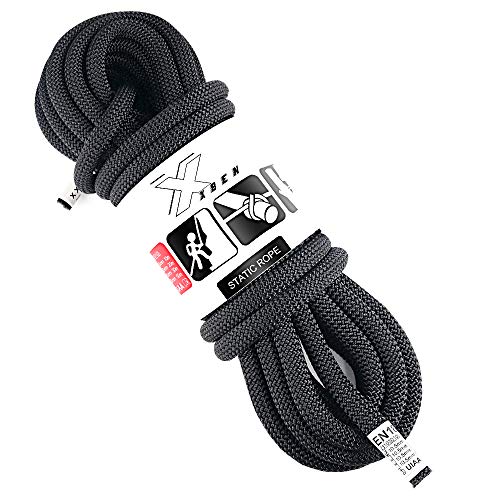
This 50-meter version of the X BEN 10.5 mm static rope is built for longer canyon routes and fixed-line setups. It preserves the same low-stretch performance, with a double-braid construction intended to distribute tension evenly and retain strength when wet. The rope’s nylon core provides robust elongation characteristics while the polyester outer cover adds abrasion resistance for rock contact.
Practical notes: the 50-meter length makes it suitable for longer rappels or multi-pitch canyoneering trips. The rope’s lightweight feel and smooth handling assist with quick knot work and efficient anchor construction in variable canyon environments.
Sterling HTP Static Canyoneering Rope 9mm

The Sterling HTP Static rope emphasizes simplicity and durability for canyoneering. With a 9mm diameter and a static elongation around 0.80%, this rope is optimized for controlled descents and reliable anchor setups. Its static nature reduces rope stretch during rappels and hauling tasks, which can be advantageous in long, technical canyon routes with fixed-line requirements.
Premium considerations include abrasion resistance and a robust build intended to withstand repeated trips through rough canyon terrain. The 61-meter length supports various descent configurations while maintaining manageable weight for multi-pitch canyoneering days.
Sterling CanyonPrime 8.5 mm Canyoneering Rope

The CanyonPrime 8.5 mm rope focuses on compact handling and essential durability for canyoneering. Constructed with 100% polyester for the core and sheath, it emphasizes comfortable handling during rappels and easy packing for expeditions. The lighter diameter aids in ease of movement through narrow canyons while delivering reliable performance in wet conditions common in canyon descents.
Key advantages include improved grip and smoother rappels compared to thicker ropes, along with robust abrasion resistance that supports long-term use in rocky canyon environments. This option balances weight and strength for those who prioritize maneuverability on complex routes.
Buying Guide: Key Purchase Considerations For Canyoneering Ropes
- Static vs. dynamic: For most canyoneering applications, static ropes are favored for rappels and hauling due to minimal elongation, while dynamic ropes are better for climbing sections where fall potential exists.
- Elongation and elongation rate: Lower elongation means more predictable descents, crucial for line control in tight canyons. Review static elongation percentages to anticipate bounce and feeder load.
- Diameter and weight: Thinner ropes (around 8.5–9 mm) are lighter and more maneuverable but may wear faster in abrasive rock. Mid-range diameters offer a balance between durability and ease of handling.
- Length: Consider canyon length, access points, and the need for multi-pitch setups. Longer ropes enable more options but add weight to your pack.
- Material and construction: Polyester cores and weaves generally provide good abrasion resistance and stability in wet conditions. Double-braid constructions can distribute tension evenly and improve handling.
- Water exposure: Wet canyons demand moisture-resistant outer fibers and minimal shrinkage. Look for ropes designed to perform in wet environments and that dry relatively quickly.
- Maintenance: Ropes should be inspected for cuts, glazing, and core exposure. Proper storage, drying, and cleaning extend rope life and reliability.
- Anchoring considerations: Plan anchors that can tolerate static loads without excessive loop wear. Practice knotting and rigging techniques appropriate to canyon work.
- Cost vs. lifespan: Higher-strength, abrasion-resistant ropes may cost more upfront but can reduce replacement frequency if properly cared for.
Add a Comment