For cyclists seeking precise power data to optimize training, pedal-based power meters offer a convenient, accurate solution. This guide highlights five leading options, spanning single-sensing and dual-sensing designs, with wide compatibility to road and mountain setups. Explore installation ease, battery life, and connectivity to bike computers or smartphones. Each choice is evaluated to help you pick a model that fits your riding style and gear needs.
| Product | Brand | Key Benefit |
|---|---|---|
| Favero Assioma Uno Power Meter Pedal | FAVERO | Left-side power sensing; strong ecosystem |
| Favero Assioma Duo Power Meter Pedal | FAVERO | Left+Right power sensing; balanced data |
| Favero Assioma PRO RS-2 | RiseUP | Modular pedal design; road/MTB switchability |
| Magene P715 S Power Meter Pedals | Magene | High precision; long battery life; quick install |
| Wearable4U Favero Assioma Duo (Bundle) | Wearable4U | Includes extra accessories; dual-sensor data |
Favero Assioma Uno Power Meter Pedal

The Favero Assioma Uno is a single-sensing pedal-based power meter designed for road use. It offers easy installation and compatibility with Bluetooth and ANT+ devices for bike computers and smartphones. The unit includes rechargeable batteries claimed to deliver up to about 50 hours of use, depending on data transmission and settings. Precision is driven by left-side power data and automatic temperature compensation to improve accuracy across varying conditions.
Key features cited include straightforward swapping between bikes, reliable wireless connectivity, and convenient charging. The Uno is popular among riders who want a compact, proven left-pedal solution that fits into existing Look KeO-style cleats with minimal fuss. This model emphasizes simplicity and dependable data collection for steady training feedback.
Favero Assioma Duo Power Meter Pedal

The Assioma Duo expands power measurement to both pedals, delivering true left/right pedal data for balanced insights. With dual-sensor design, the Duo provides high-resolution power metrics and the ability to track asymmetries. Installation mirrors the Uno, but the dual-sensor configuration requires careful setup to ensure accurate data stream to compatible devices via Bluetooth or ANT+. Battery life remains strong with rechargeable cells, supporting long training blocks between charges.
Riders seeking detailed biomechanical feedback—like sprint power balance and pedal stroke symmetry—will benefit from the Duo’s richer data set. Clear maintenance steps and reliable wireless pairing help integrate the sensors with popular head units and mobile apps for real-time analysis.
Favero Assioma PRO RS-2
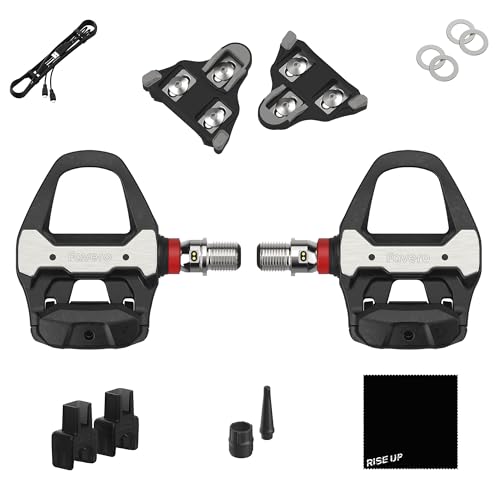
The Assioma PRO RS-2 from RiseUP offers a modular, road-ready solution with a compact spindle housing that stores the electronics and battery inside. The pedal system is described as compatible with most SPD-SL road setups and can be swapped between road and MTB bodies while preserving the power sensor. Installation is straightforward, and users can pair the pedal-based power data with a bicycle computer or smartphone via Bluetooth and ANT+. The PRO RS-2 emphasizes versatility and a robust build for diverse riding conditions.
This model targets riders who want a single power meter platform that can adapt across different bikes and disciplines. The design prioritizes a clean integration, easy maintenance, and reliable data transfer across multiple devices for training analytics.
Magene P715 S Power Meter Pedals

The Magene P715 S pedaling system advertises ±1% power accuracy with a generous battery life up to about 120 hours. It supports both ANT+ and Bluetooth connections, enabling seamless pairing with a wide range of bike computers, GPS units, and smartphones. Installation is described as quick—about a minute—from box to ride. The P715 S emphasizes precise metrics for consistent performance, with a design that appeals to riders who value long-term reliability and easy device pairing for training sessions and races.
As a dual-sensing or single-sensing option (depending on model), Magene products often attract riders looking for competitive accuracy at a reasonable price, with straightforward maintenance and straightforward upgrades to compatibility with existing pedal systems.
Wearable4U Favero Assioma Duo Pedal Bundle

This Wearable4U bundle centers on the Favero Assioma Duo with extra accessories including red 6-degree float cleats and a cleaning cloth. The Duo’s dual-sensor layout provides true left/right data, helping athletes analyze asymmetries and optimize pedal technique. The bundle is designed for riders who want a comprehensive package to equip multiple bikes or to ensure maintenance readiness. Easy installation and tool-free bike transfer remain strong selling points, with Bluetooth and ANT+ connectivity enabling versatile data transfer to compatible devices.
The inclusion of additional cleats and cleaning items adds value for riders prioritizing maintenance and setup efficiency. The Duo’s established data quality and robust ecosystem make it a practical choice for multi-bike households or training groups.
Buying Guide: Key Purchase Considerations
- Power sensing approach: Choose single-sensing (one pedal) for simplicity and lower cost, or dual-sensing (both pedals) for left/right balance and asymmetry insight.
- Bike compatibility: Confirm cleat compatibility (Look Keo, SPD-SL, etc.) and whether you need road, MTB, or mixed capabilities. Some models support modular or swap-ready pedal bodies for multi-discipline use.
- Connectivity: Ensure compatibility with your preferred bike computer, GPS unit, or smartphone via Bluetooth and/or ANT+. Check whether CT data export is supported for post-ride analysis.
- Battery life and charging: Battery longevity varies by model. Consider how often you ride, how frequently you charge, and whether rechargeable options fit your routine.
- Installation and transfer: Look for pedals that install like standard pedals and allow easy transfer between bikes without specialized tools.
- Data accuracy and latency: Models with automatic temperature compensation (ATC) and high sampling rates tend to deliver more stable readings across conditions; consider your climate and riding temperature range.
- Durability and weather sealing: IP-rated housings or rugged spindle designs help in wet or muddy conditions, particularly for all-weather training or mixed surfaces.
- Cost vs. value: Dual-sensing systems provide richer data but at higher price points. Evaluate how much asymmetry data improves training decisions for your goals.
- Warranty and support: Check manufacturer warranties and after-sales support, especially if you ride aggressively or in tough environments.
Performance data from power meters should be interpreted within training context, including FTP targets, ride duration, and race goals. When selecting a model, balance data granularity with practicality: consider whether you need left/right balance, how often you travel with multiple bikes, and how you prefer to access data in your training workflow.
Add a Comment