The right pair of snow boots can make or break a winter trek. This guide assembles five top-rated men’s snow boots designed to deliver warmth, traction, and protection on snowy terrain and during snowshoeing adventures. Each option combines waterproofing, insulation, and grippy outsoles to help you stay dry and steady in ice and slush. Read on to compare features and find the best fit for your winter excursions.
| Product | ||||
|---|---|---|---|---|
| FREE SOLDIER Mens Snow Boots | FREE SOLDIER | ~3 lb per pair | Waterproof suede upper; warm fleece lining | Nonslip, versatile for snowshoeing |
| Ablanczoom Snow Boots | Ablanczoom | Midweight | Waterproof faux leather upper; warm faux fur lining | Lightweight with padded collar |
| ROCKMARK Winter Snow Boots | ROCKMARK | Moderate | FUR-tinged lining; non-slip rubber outsole | Excellent grip and heat retention |
| SHULOOK Snow Boots | SHULOOK | Lightweight | 100% waterproof synthetic leather; SL-TEX membrane | Ultra-warm faux fur lining |
| Nextpath Snow Boots | Nextpath | Lightweight | 100% waterproof shell; 3M Thinsulate insulation | Aggressive traction; windproof gusset |
Note: All options are suitable for winter hiking and snowshoeing, offering a blend of warmth, dryness, and footing stability. Each pair emphasizes different strengths—some prioritize insulation and warmth, others focus on traction and lightweight comfort. Your best choice depends on climate intensity, duration of use, and terrain type.
FREE SOLDIER Mens Snow Boots With Warm Fleece Lining

The FREE SOLDIER snow boots are designed for warmth and protection in winter conditions. The interior features a full fleece lining that feels like thick socks, providing substantial insulation. A gusseted tongue helps block wind, snow, and water when trekking through snow and slush. The suede upper is waterproof, and a sturdy rubber shell shields feet from puddles and rough terrain. The rubber outsole includes nonslip patterns to enhance grip on icy surfaces. At roughly three pounds per pair, they offer a balance of warmth and mobility for longer snowshoeing sessions.
Ablanczoom Snow Boots For Men

These Ablanczoom boots feature a waterproof faux leather upper to keep feet dry in wet snow. A soft faux fur lining provides obvious warmth, comfortable for light outdoor work and urban commutes alike. The boots are designed to stay lightweight for easy movement, with a padded collar to protect the ankles from scrapes. This combination makes them a solid option for shorter-to-mid-length winter treks where warmth and ease of movement are prioritized.
ROCKMARK Winter Snow Boots For Men

ROCKMARK boots offer a robust non-slip rubber outsole designed for rugged terrain and varied surfaces. A full fur lining from the ankle to the insole maintains warmth while breathable materials help prevent overheating. The top is finished with a memory-foam-esque design to minimize rubbing. The combination of warmth, traction, and durable construction makes these boots well-suited for snowshoeing across snow and ice while reducing fatigue on long treks.
SHULOOK Men’s Snow Boots Waterproof Warm Fur Lined

SHULOOK’s snow boots are built around a 100% waterproof synthetic leather and nylon upper with a SL-TEX membrane to prevent water ingress while allowing moisture to escape. The ultra-warm faux fur lining provides substantial warmth in extreme cold, and the gusset tongue design minimizes cold air entry. Weighing minimally, these boots are engineered for long wear without significant fatigue and are a strong option for extended snowshoeing days in harsh weather.
Nextpath Men’s Snow Boots For Extreme Cold
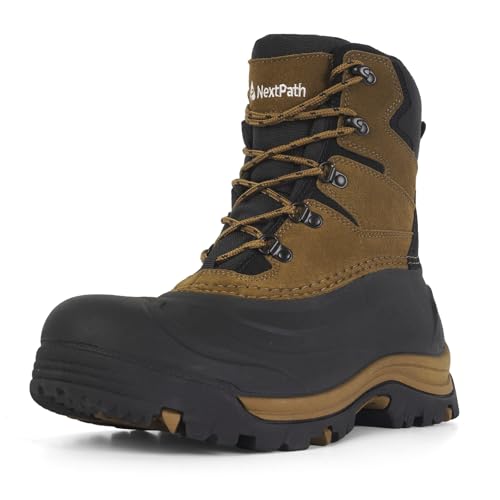
Nextpath concentrates on warmth and protection with an 8-inch boot height and a plush synthetic fleece lining layered with 3M Thinsulate insulation. The windproof gusseted tongue and reinforced collar form a snow-tight seal at the cuff. A rubberized toe cap and protective heel counter guard against rocks, while the 5mm-lug outsole provides solid traction on icy surfaces. The shell uses a waterproof 1.8mm suede and 600D Oxford fabric blend for durability and weather resistance, making them suitable for longer, demanding snowshoeing trips.
Buying Guide: Key Purchase Considerations
- Waterproofing and insulation: For snowshoeing, you want boots with a waterproof upper and substantial insulation. Look for membranes like SL-TEX, XPETI-Dry, or fleece and Thinsulate layering when choosing boots for subfreezing conditions.
- Traction: A grippy outsole with deep lugs is essential for icy trails. Rubber outsoles with multidirectional lugs offer stability when climbing or traversing uneven snow.
- Fit and weight: Snowshoeing boots should balance warmth with weight. Lighter boots reduce fatigue on long treks, but must still provide adequate insulation. Consider a snug fit with a secure lacing or speed-lace system.
- Tongue design and seal: Gusseted tongues prevent snow from entering the boot. This feature is particularly helpful when walking through fresh powder or crossing slushy patches.
- Inner lining and comfort: Removable or easily washable liners help maintain hygiene and warmth. Look for plush fur or fleece linings for extended comfort on cold days.
- Durability and protection: Reinforced toe caps and strong heel counters protect against rocks and wear. A well-constructed upper with double stitching improves longevity in winter environments.
- Versatility: If you plan to use the boots for mixed activities (hiking, work, or daily wear), choose a model that provides a balance of warmth, water resistance, and everyday usability.
- Sizing and climate: Consider size adjustments for thick socks. In extremely cold climates, a roomier toe box can reduce numbness, but ensure the boot remains secure around the heel.
When selecting boots for snowshoeing, consider the typical terrain and duration of use. For icy trails and long days, prioritize insulation and traction. For urban or milder climates, lighter, more versatile options with reliable water resistance may suffice. The models above provide a range of trade-offs to match different winter activities and comfort preferences.
Add a Comment