Choosing the right low angle kayak paddle can improve efficiency, reduce fatigue, and help you glide smoothly across the water. This guide highlights five top options and explains what to look for when selecting a paddle for low-angle paddling, including shaft materials, blade design, adjustability, and weight. Each product below is chosen for reliability, performance, and value for American paddlers of varying skill levels.
| Product | Brand | Length Range | Key Benefit |
|---|---|---|---|
| OCEANBROAD Kayak Paddle 90.5in/230cm | OCEANBROAD | 230 cm | Durable alloy shaft with fiberglass reinforced blade |
| Intex 86″ Kayak Paddle | Intex | 86″ (≈218 cm) | Ribbed spoon blades, three-position adjustability |
| Backwater Assassin Carbon Fiber Hybrid Paddle | YakGear | 230–260 cm | Carbon fiber hybrid shaft, versatile blade design |
| WONITAGO Premium Carbon Fiber Paddle | WONITAGO | 220–240 cm | Carbon fiber shaft, reinforced blades, floatable |
| Best Marine and Outdoors Carbon Paddle | Best Marine and Outdoors | 220–250 cm | Featherweight carbon with dual-length options |
Note: All products are selected for low-angle paddling capabilities, focusing on stability, control, and long-session comfort. Each section below provides a concise summary and practical considerations to help you compare options quickly.
OCEANBROAD Kayak Paddle 90.5in/230cm
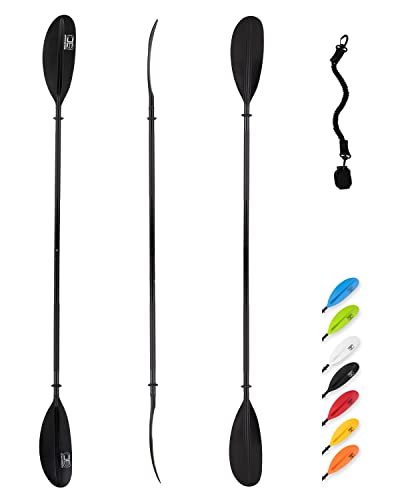
With a high-quality aluminum alloy shaft and a fiberglass reinforced PP blade, this paddle emphasizes durability at a friendly price point. Its 230 cm length is a practical middle ground suitable for a wide range of paddlers and craft. A shrink-wrapped PE tube on the shaft improves grip and comfort, particularly in cooler weather, which helps prevent blistering during longer sessions. The paddle breaks down into two sections for easy transport and storage, making it a versatile option for beginners and intermediate kayakers alike. Its low-angle compatibility supports efficient strokes with steady application of force through the blade.
Intex 86″ Kayak Paddle

Designed for strength and efficiency, this paddle features ribbed spoon-shaped blades that enhance performance and forward propulsion. The shaft is lightweight but durable, facilitating easier handling both on and off the water. Three-position feather adjustability offers flexibility to find the most comfortable grip and stroke angle for low-angle paddling. This makes it a solid option for new paddlers seeking a balance of power, control, and ease of use across diverse water conditions.
Backwater Assassin Carbon Fiber Hybrid Paddle

A carbon fiber hybrid design delivers lightness and strength for extended paddling. The blade incorporates a patented “Hook and Teeth” feature to tackle tasks such as grabbing lines or pushing off docks, which can be advantageous for navigating from shorelines or near obstacles. Length options cover 230–260 cm, accommodating both high- and low-angle strokes. This paddle suits paddlers seeking responsive performance without sacrificing control during long passages or technical maneuvers.
WONITAGO Premium Carbon Fiber Paddle

This paddle combines a carbon fiber shaft with reinforced PP and fiberglass blades to deliver lightness, durability, and strong water contact. The blade design minimizes flutter while maintaining power, and the paddle is adjustable across 86–94 inches (220–240 cm). Weighing around 2 pounds, it aims to reduce paddle fatigue for longer paddling sessions. Suitable for a wide range of kayaks and paddlers, it emphasizes a balance of speed, control, and comfort for low-angle strokes.
Best Marine and Outdoors Carbon Paddle (Blue Cloud)

Featuring a carbon shaft and fiberglass-reinforced polypropylene blades, this paddle is designed for featherweight performance and endurance. Available in multiple lengths (including 220, 234, and 250 cm), it separates into two pieces for easy transport. Its reduced weight aims to lower shoulder strain and improve control, making it a practical choice for sailors seeking a high-performance paddle without added bulk.
Best Marine and Outdoors Carbon Paddle (Black)

This variant mirrors the Blue Cloud model with a carbon shaft and reinforced blades, designed for featherweight performance and quick, stable strokes. It splits into two pieces for convenient storage and transport, with length options that support low-angle paddling styles across a broad range of kayaks. The paddle emphasizes comfort through reduced weight while maintaining robust performance in varied water conditions.
WONITAGO Kayak Paddle With Fiberglass Shaft

This paddle features a fiberglass shaft paired with a reinforced nylon blade. The blade design prioritizes durability and resistance to corrosion, while the nylon material helps maintain strength in both saltwater and freshwater environments. Adjustable from approximately 230 to 250 cm, the paddle provides a balance of power and control, suitable for a wide range of kayakers and water conditions. Its lightweight yet sturdy construction supports comfort during longer paddling sessions and low-angle strokes.
Buying Guide: Key Purchase Considerations For Low Angle Paddling
- Shaft material and weight: Carbon fiber shafts offer the best balance of lightness and stiffness, reducing fatigue on long trips. Aluminum shafts are durable and affordable but heavier.
- Blade design and length: Spoon or asymmetrical blades can improve bite and stability at low angles. Shorter blades are easy to maneuver; longer blades generate more propulsion but require stronger technique.
- Adjustability and feathering: Multi-position feather settings let you optimize stroke angle and reduce wind resistance. Three- or four-position adjustability is common; look for easy-to-use locking mechanisms.
- Floatability and storage: Floating paddles help prevent loss if dropped. Consider 3- or 4-piece designs for compact storage and transport.
- Durability in different waters: If paddling in saltwater, look for corrosion-resistant blades and shafts; for freshwater, any robust build will perform well.
- Compatibility with your kayak: Ensure the paddle length matches your cockpit width and your preferred stroke style. Low-angle paddles typically favor paddlers seated in a stable, well-supported posture.
- Budget and value: Higher-end carbon paddles offer performance advantages but at a higher cost. Hybrid designs can balance weight, durability, and price.
When selecting a low-angle kayak paddle, consider your typical paddling conditions, your height, and your strength. A properly matched paddle can reduce fatigue, improve efficiency, and enhance overall maneuverability on long trips or challenging currents.
Add a Comment