Choosing the right high bar for gymnastics can boost a home practice routine, help young athletes grow confidence, and support skill progression. The following selections prioritize stability, adjustable heights, and folding designs that fit compact spaces. Each option is evaluated for safety, ease of assembly, and durability to serve beginners through developing gymnasts. This guide includes five top choices with practical features for families and clubs alike.
| Product | Brand | Adjustable Height | Weight Capacity | Foldable |
|---|---|---|---|---|
| Tepemccu Expandable Gymnastics Bars | Tepemccu | 34.8” to 50.8’’ | ≤140 Lbs | Yes |
| Safly Fun Gymnastics Bar | Safly Fun | 3′ to 5′ (10 levels) | ≤300 Lbs | Yes |
| FC FUNCHEER Foldable Gymnastics Bar | FC FUNCHEER | 45″ to 71″ (13 heights) | ≤500 Lbs | Yes |
| RINREA Gymnastic Bars | RINREA | 35” to 51” | ≤140 Lbs | Yes |
| MARFULA Gymnastic Bar | MARFULA | 36″ to 60″ | ≤350 Lbs | Yes |
These products were selected for their strong balance of safety, adjustability, and space-saving designs. For families with limited room, foldable bars and wide base stability offer practical advantages, while clubs may prioritize higher weight capacities and broader height ranges for diverse ages.
Tepemccu Expandable Gymnastics Bars

The Tepemccu bar emphasizes a triangle-based stability design to minimize wobble during routines. It supports easy storage with folding functionality and includes a height range suitable for ages around 3 to 8 years. The unit’s foldable feature helps parents maintain a tidy practice area while still providing a sturdy practice surface. Weight capacity and height steps offer a practical progression path as young gymnasts gain strength and confidence.
Safly Fun Gymnastics Bar for Kids
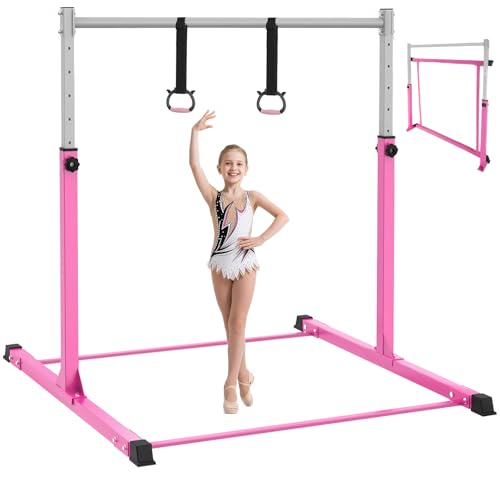
Safly Fun’s model focuses on robust steel construction and a large base for stability, with rubber end caps to minimize floor movement. The height adjusts from 3 to 5 feet in 10 increments, accommodating growing children and evolving skills. Its assembly is designed to be straightforward, and the weight rating supports a broad user base, making it suitable for home gyms or shared training spaces. The design aims for steady performance across a range of routines while preserving safety features.
FC FUNCHEER Foldable Gymnastics Bar
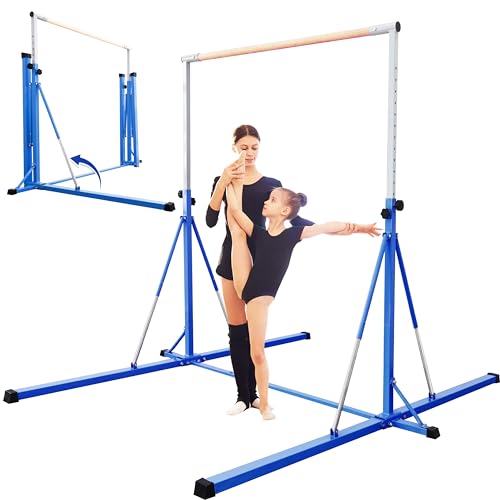
FC FUNCHEER offers a foldable kip bar with a wide base for stability and a six-base-end structure that reduces wobble. It supports a weight capacity up to 500 pounds and features 13 height options from 45 inches to 71 inches, making it adaptable for a wide range of ages and skill levels. The base length and overall footprint are designed to maintain balance during high-intensity moves, while the folding mechanism simplifies storage in smaller spaces.
RINREA Gymnastic Bars

RINREA emphasizes ease of assembly and folding, with a height range from 35 to 51 inches. The bar uses a thick galvanized steel frame and a triangular support system, along with non-slip feet to enhance stability on various floor surfaces. It is designed for at-home use and light-to-moderate training, with a weight limit appropriate for kids and early teens. Quick adjustments allow coaches or parents to tailor sessions without lengthy setup.
MARFULA Gymnastic Bar

MARFULA presents a professional-grade kip bar designed for kids and teens up to 20 years old, with a weight capacity of up to 350 pounds. The height is adjustable from 36 to 60 inches, offering 13 different levels to match skill development. The big triangle structure increases overall stability, reducing wobble during more demanding routines and providing a solid platform for strengthening core and upper-body skills in both home and gym settings.
Seliyoo Foldable Gymnastic Bar

Seliyoo’s bar is designed for ages 5-20 with a high weight tolerance and a foldable mechanism for space-saving storage. Height ranges from 35 to 59 inches across 12 settings, with a base width that accommodates common gymnastics mats. The design emphasizes portability, safety elastic straps to secure folding, and wheels that ease movement between rooms or outdoor areas. It pairs well with practice mats for a comprehensive home gym setup.
Buying Guide
- Age and skill level: Match the bar’s height range and weight capacity to the user’s age and current ability. Start with lower heights for beginners and move up as confidence builds.
- Stability and base design: Look for a three- or six-triangle base, wide footprint, and anti-slip foot pads. These features minimize wobble during swings and handholds.
- Adjustability: Prioritize models with multiple height settings and secure locking mechanisms. A wide height range supports long-term use as skills progress.
- Foldability and storage: If space is limited, choose bars with foldable frames and compact folded dimensions. Consider ease of folding to encourage regular use.
- Materials and durability: Steel frames and reinforced joints boost longevity. Check for rust-resistant coatings and robust hardware for repeated assembly and disassembly.
- Safety features: Look for padded grips, rounded edges, and reliable locking systems. Proper installation instructions and recommended floor mats further enhance safety.
- Usage environment: Indoor vs. outdoor use affects material choices. Weather exposure can influence durability; choose coatings designed for the intended environment.
- Maintenance: Regularly inspect screws, joints, and padding for wear. Tighten connection points to prevent looseness and maintain stability over time.
- Budget considerations: Higher weight capacities and more height options often correlate with higher price. Balance features with your practice needs and storage space.
- Compatibility with mats: Ensure the bar height and base work with your existing gym mats or flooring so that the bar aligns with the mat’s height for safe landings.
In selecting a high bar for gymnastics, prioritize stability, safety, and adaptability. The listed options provide a spectrum of capacities and configurations suitable for home gyms, school rooms, and training centers. Evaluating each model against user age, space, and routine goals helps identify the best fit for consistent, skill-building practice.
Add a Comment