Choosing the right floor mats for exercise helps protect your flooring, reduces impact on joints, and keeps your workout area clean and organized. This guide highlights five top mats designed for home gyms, yoga, and general fitness routines. Each option balances cushioning, durability, and ease of maintenance to fit a variety of workout spaces and equipment needs.
| Product | Type | Size / Coverage | Main Benefit |
|---|---|---|---|
| CAP Barbell All Purpose Folding Anti Tear Mat | Folding Gym Mat | Portable; 4-panel padding | Easy transport and superior cushioning |
| ProsourceFit Puzzle Mat ½ in (12 tiles) | Interlocking EVA Foam | 48 sq ft total | Cushy, protective floor padding |
| Amazon Basics Extra Thick Yoga Mat | Yoga / Exercise Mat | Extra thick NBR foam | Dense support with cushioned comfort |
| AIRHOP 0.56in Thick Mats (12 tiles) | Interlocking Rubber Top EVA Foam | 48 sq ft total | Dual-layer protection and non-slip surface |
| ProsourceFit Puzzle Mat ½ in (6 tiles) | Interlocking EVA Foam | 24 sq ft total | Lightweight, versatile padding for small spaces |
CAP Barbell All Purpose Folding Anti Tear Exercise Mat

The CAP Barbell mat is designed for portability and easy storage, featuring built-in nylon handles for quick transport. Its four-panel high-density foam padding offers enhanced cushioning and impact absorption, making it suitable for floor-based workouts, gymnastics practice, and general fitness routines. Cleaning is straightforward, as the mat uses a material that can be wiped down and air-dried to keep a gym space tidy. This option suits users seeking a lightweight mat that can be folded for travel or storage without sacrificing comfort during floor exercises.
ProsourceFit Puzzle Mat ½ in — 12 Tiles

This ProsourceFit interlocking EVA foam mat delivers durable, non-skid padding ideal for home gyms and kids’ play areas. The foam offers high-density support with cushioning while remaining lightweight and easy to assemble. The tiles are water-resistant and designed to reduce noise, making them suitable for garages, living spaces, or multi-use rooms. Note that color and texture may vary slightly by batch, but the overall setup provides a versatile solution for temporary or semi-permanent gym flooring on flat, hard surfaces.
Amazon Basics Extra Thick Yoga Mat

The Amazon Basics mat features 100% NBR foam, delivering extra thickness and cushioning for yoga, floor workouts, and general exercise. Its cushy surface supports longer sessions and reduces pressure on joints. While easy to roll and carry, it remains a simple, reliable option for users seeking a straightforward mat without added complexity or specialized features. The blue color offers a classic look for studios or home spaces.
AIRHOP 0.56in Thick Interlocking Mats
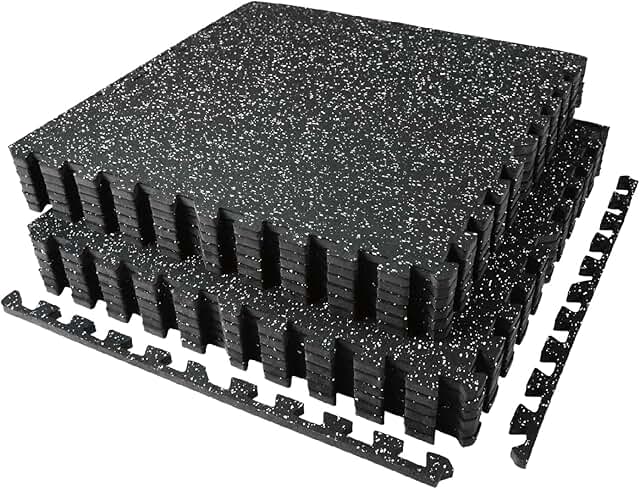
AIRHOP mats combine a textured rubber top layer with high-density EVA foam in a dual-layer design for enhanced floor protection and shock absorption. The 12 interlocking tiles create a stable 48-square-foot surface, designed to prevent shifting during workouts. The larger locking system helps ensure a secure fit, while the recycled rubber build adds durability to withstand heavy gym equipment and intense routines. These features make it suitable for high-impact training and equipment-heavy home gyms.
ProsourceFit Puzzle Mat ½ in — 6 Tiles

This smaller ProsourceFit option provides interlocking EVA foam tiles ideal for compact spaces or light-use home gyms. The ½-inch thickness offers reliable cushioning for body-weight exercises, stretching, and light equipment workouts. Like its larger variant, it emphasizes easy cleaning and portability, making it a versatile choice for apartments or rooms where space is a premium. It remains a practical solution for achieving a padded workout surface without extensive setup.
Buying Guide: Key Considerations For Choosing Exercise Mats
- Mat Type and Use: Interlocking foam mats are versatile for home gyms and kids’ play areas, while folding mats emphasize portability and storage. Choose based on your primary routines (yoga, weight lifting, cardio) and space constraints.
- Thickness and Cushioning: Thicker mats provide more joint protection for high-impact activities but are heavier and bulkier. Lighter mats work well for travel or lightweight workouts, while high-density foam resists compression over time.
- Durability and Surface: Rubber-top layers and non-slip textures improve stability during workouts with equipment. EVA foam offers good cushion and resilience, but edge durability varies by brand and tile connection quality.
- Water Resistance and Cleaning: For sweaty workouts or kids’ spaces, water-resistant foams simplify cleaning. Check for materials that wipe clean easily and dry quickly to prevent mold or odors.
- Size and Coverage: Measure your workout area to determine how many tiles or mats are needed. Interlocking systems allow scalable coverage, while folding mats may be easier to store in small spaces.
- Noise and Floor Protection: Choose mats with sound-dampening properties if you share living spaces. A dense surface reduces scuffs and protects flooring from heavy equipment like dumbbells and kettlebells.
- Portability and Storage: If you travel or have limited storage, prioritize foldable or single-piece mats with carrying handles. Always check weight and ease of transport in your decision.
Add a Comment