Modern electric longboards combine power, range, and portability for riders of all levels. This guide highlights five top options and helps you compare performance, range, and ease of use. Each choice is evaluated on power, battery life, wheels, and user-friendly features to suit beginners, teens, and adults alike.
| Product | Brand | Top Speed | Range | Motor Type | Notable Feature |
|---|---|---|---|---|---|
| Dnaskate V4 Electric Skateboard | DNASKATE | 28 mph | 22 miles | Dual 500W hub motors | LCD remote, 4 gears |
| Dnaskate V20 Electric Skateboard | DNASKATE | 28 mph | 22 miles | Dual 500W hub motors | Remot e with LCD, 4 gears |
| UDITER S3 Electric Longboard | UDITER | 28 mph | 10–13 miles (swappable battery) | Dual 600W hub motors | Removable battery, swap option |
| Askate A1 Electric Skateboard | ASKATE | 25 km/h (≈15.5 mph) | Up to 17 miles | 350W motor | MR Remote with screen |
| MEEPO Campus V3 Envy | Meepo | Up to 29 mph | 8–11 miles | Dual 800W hub motors | 4-speed remote, carry handle |
Note: This table summarizes the five selected models to help you compare core specs at a glance. Individual product sections below offer deeper insights and examples of real-world usability.
Dnaskate V4 Electric Skateboard
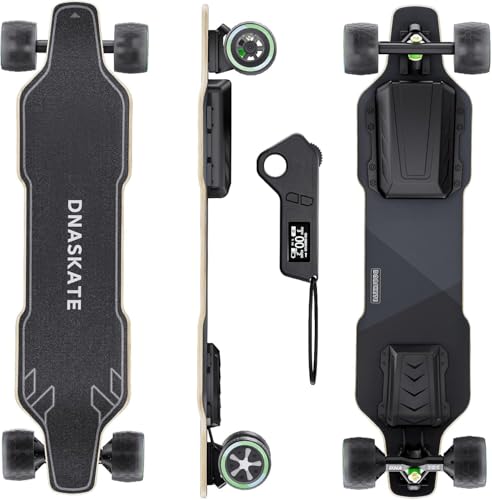
The Dnaskate V4 pairs two 500W hub motors for strong hill-climbing and quiet operation. With a top speed of up to 28 mph and a 22-mile range, it offers solid performance for daily commutes and weekend carving. A 288Wh battery supports quick charging, capable of a full charge in about four hours. The LCD remote displays speed, power, and gear mode, enabling four adjustable speed levels. Beginners can start in the lower gears, easing acclimation to riding dynamics. This model aims at riders who want a balance of performance and simplicity without frequent upgrades.
Key considerations: quiet hub motors can reduce maintenance needs, while the four-gear system helps new riders progress. The design favors stable cruising and dependable acceleration, making it suitable for both adults and teens seeking a more confident ride. Potential drawbacks include heavier weight and higher initial cost compared to entry-level boards.
Dnaskate V20 Electric Skateboard

The V20 continues the DNASKATE approach with dual 500W hub motors and a 22-mile range—matching the V4’s performance envelope but with updated battery management and a refreshed remote interface. The 288Wh pack supports rapid charging, and the LCD remote provides at-a-glance feedback on speed and battery life. Four gears offer a wide range of control options, enabling riders to tailor acceleration and braking to urban environments, bicycle lanes, or smooth sidewalks. This model is well-suited for riders seeking versatile daily use and a reliable long-range option.
Key considerations: similar power and range as the V4 ensures predictable performance, while refinements in software and remote feedback can improve user experience. Wheel size and deck geometry influence stability at higher speeds, so riders may want to test ride to confirm comfort. Potential drawbacks include the shared ecosystem of DNASKATE accessories and parts compatibility considerations for future upgrades.
UDITER S3 Electric Longboard

The UDITER S3 stands out with a swappable 218Wh battery that enables extended riding sessions beyond a single charge. This feature allows riders to carry an extra battery (sold separately) for a potential 20–26 miles of range. Dual 600W hub motors deliver up to 28 mph and tackle 30-degree hills. The two-charger option (sold separately) cuts recharge times, helping riders get back on the road quickly. This model appeals to commuters or riders who value range flexibility and fast turnarounds between rides.
Key considerations: battery swap capability adds versatility but requires space for additional packs and charging infrastructure. The dual-motor setup offers strong torque, yet riders should account for weight and deck size when navigating crowded urban spaces. The modular approach supports different riding styles, from casual cruising to efficient commuting.
Askate A1 Electric Skateboard

The Askate A1 emphasizes user-friendly operation with a remote featuring a built-in LED display to monitor battery, speed, and mileage. With a range up to 17 miles and a 350W motor, it targets younger beginners and teens seeking an approachable ride. The compact deck (31.5 inches) and 25 km/h top speed balance portability and performance, making it a practical choice for school commutes or casual weekend rides. The remote’s four modes support gradual skill development while maintaining reliable braking and acceleration.
Key considerations: ideal for beginners and younger riders due to safety-focused remote features and moderate speed. The UL certification and battery protection are reassuring, but riders should evaluate weather exposure and terrain variety to ensure the board meets daily needs.
MEEPO Campus V3 Envy

The Campus V3 Envy offers up to 29 mph with dual 800W hub motors and a 324Wh battery, delivering strong torque for urban riding and longer commutes. The board’s compact 26.7-inch deck paired with an 8-ply maple and bamboo finish provides a balance of stiffness and flex for stability and comfort. A four-speed remote allows riders to choose a pace appropriate for skill level, from mild cruising to spirited carving. The V3 series is generally recommended for riders who want a capable performer with a carry-friendly design.
Key considerations: high top speed and substantial range make this model appropriate for experienced riders or commuters who need efficiency. The deck length and weight distribution affect maneuverability in crowded areas, so newcomers should practice in open spaces before navigating traffic-like environments.
Buying Guide: Key Purchase Considerations And Comparisons
- Power and speed: Hub motors are common for quiet operation and reliability. If you plan steep climbs or fast cruising, look for dual motor setups and higher wattage ratings (around 600W per motor or more).
- Battery and range: Compare battery capacity (Wh) and consider removable or swappable options. Removable packs add flexibility for extended trips but may require extra accessories or charging solutions.
- Charging time: Fast charging helps riders get back on the road quickly. If you frequently ride daily, a board with shorter recharge times or dual charging ports can be advantageous.
- Remote control: A clear display, multiple speed modes, and responsive braking contribute to safer riding—especially for beginners and teens. Look for remotes with battery status, speed readouts, and easy re-centering.
- Deck and build: Deck length, material, and build quality affect stability and comfort. Shorter boards are easier to carry, while longer decks provide more balance at speed.
- Weight and portability: Heavier boards typically house larger motors and batteries but can be tougher to carry. Consider your commuting needs and storage space at home or work.
- Terrain and safety: For city riding, look for boards with good wheel setups and grip. Waterproof or IP ratings enhance resilience in light rain or spray.
- Maintenance and service: Hub motors require less maintenance than belt-driven systems, but battery care and remote reliability remain important. Ensure easy access to parts and service centers.
- Starter suitability: Beginners should prioritize four-speed remotes, stable acceleration, and a forgiving top speed. Teens may benefit from boards with safety features and parental controls.
Add a Comment