For stationary cycling, a reliable cadence sensor helps you monitor pedal revolutions per minute, optimize training, and push your endurance. This guide highlights five top options that pair well with indoor bikes, trainers, and connected apps. Each picks up cadence data accurately, connects via Bluetooth and/or ANT+, and supports popular cycling ecosystems. Use the buying guide to compare features, compatibility, and power-saving behavior to choose the best fit for your workouts.
| Product | Brand | Connectivity | Notes |
|---|---|---|---|
| Wahoo RPM Cadence Sensor | Wahoo Fitness | ANT+ & Bluetooth | Works with many apps; dual-band for versatile syncing |
| Magene S3+ | Magene | Bluetooth & ANT+ | One-sensor mode per data type; battery management |
| Garmin Cadence 2 | Garmin | ANT+ & Bluetooth | Self-calibrating speed option; strong Garmin ecosystem |
| COOSPO Cadence & Speed Sensor BK467 | COOSPO | Bluetooth & ANT+ | Combo sensor kit; supports multiple devices with ANT+ |
| CYCPLUS Cadence & Speed Sensor | CYCPLUS | Bluetooth & ANT+ | Includes both sensors for speed and cadence |
The following sections cover five carefully selected cadence-focused sensors, ready for indoor and hybrid setups. Each product section explains key strengths, compatibility notes, and practical considerations for indoor cyclists aiming to maximize cadence-driven training.
Wahoo RPM Cadence Sensor For Indoor Training
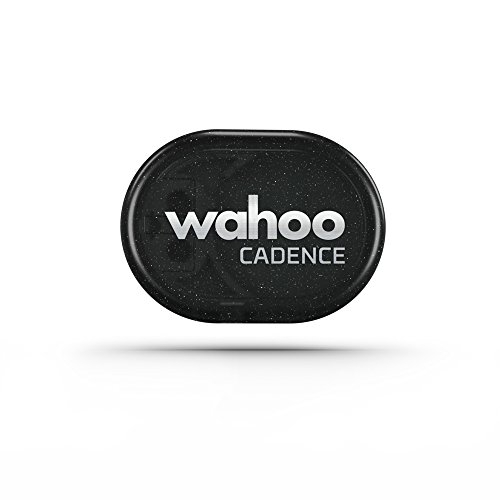
Wahoo’s RPM cadence sensor uses dual-band technology to deliver cadence data via ANT+ and Bluetooth Smart. It attaches to the crank or pedal area and is designed for compatibility with indoor bikes, spin bikes, and outdoor setups. Real-time cadence data can feed training apps such as Wahoo SYSTM, RGT, Zwift, and Peloton Digital on iOS. The sensor emphasizes cadence measurement at various speeds, helping cyclists learn pacing and efficiency. Its ANT+/Bluetooth versatility makes it a strong all-around choice for mixed training environments.
Magene S3+ Outdoor/Indoor Cadence Sensor
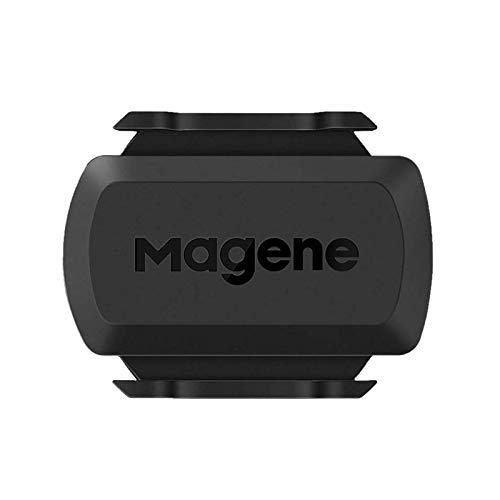
Magene S3+ offers a compact cadence sensor with wireless Bluetooth and ANT+ connectivity. Note that the device supports one mode (speed or cadence) at a time when used with a single sensor, so pairing may require a separate sensor for data types you want to track concurrently. Its design favors straightforward setup across many platforms and is compatible with popular training environments. Battery management and mode selection are practical considerations for heavier indoor workouts.
Garmin Cadence 2 Sensor

The Garmin Cadence 2 sensor attaches to the crank arm and measures pedal revolutions per minute, providing data to Garmin devices and compatible apps via ANT+ and Bluetooth. It self-calibrates with supported Edge units or other Garmin gear, contributing to consistent cadence tracking across rides. Its dual-band operation makes it a reliable choice for users already invested in the Garmin ecosystem or those who value seamless integration with multiple displays and training apps.
COOSPO Cadence & Speed Sensor BK467
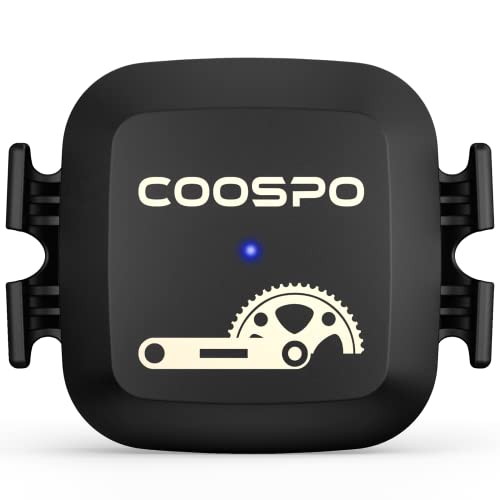
COOSPO BK467 combines both cadence and speed sensing in a single pair of sensors. It supports Bluetooth and ANT+ connections, enabling concurrent pairing with multiple devices via ANT+. This makes it a practical choice for indoor riders who want dual data streams on multiple platforms without purchasing separate sensors. Setup typically involves pairing through the respective app, as some users report that adding sensors requires locating the device within the phone’s Bluetooth settings.
COOSPO Cadence Speed Sensor BK9C

COOSPO BK9C provides accurate cadence measurements with dual-band technology (ANT+ and Bluetooth 5.0). Its waterproof IP67 rating and long battery life support extended indoor training sessions and rides in varying conditions. The BK9C is positioned as compatible with PC software and popular apps like Rouvy, Peloton, Wahoo, and other third-party platforms, offering robust cross-platform usage for cadence-focused workouts.
CYCPLUS Cadence & Speed Sensor Kit

The CYCPLUS kit includes both speed and cadence sensors, enabling simultaneous data capture. It supports both Bluetooth and ANT+ protocols, making it versatile for a broad range of devices and training apps. The dual-mode design allows quick switching between cadence and speed, helping cyclists tailor workouts in real time. Its multi-protocol compatibility makes it a practical option for those using a mix of apps and hardware across indoor and outdoor cycling contexts.
Buying Guide: Key Purchase Considerations
- Compatibility: Check which apps and devices you use (Zwift, Peloton, Garmin, Wahoo, Onelap, etc.). Ensure the sensor supports both Bluetooth and ANT+ if you plan to use multiple devices.
- Data Type: Decide whether you want cadence only or both cadence and speed. Some kits provide a single-mode sensor per data type; others include two sensors or a dual-sensor setup.
- Power and Battery: Consider battery life and sleep/idle modes. Longer battery life reduces frequent replacements during extended training blocks.
- Installation: Look for simple mounting options compatible with your crank arm or hub, and verify fit for stationary bikes or trainers you own.
- Setup Experience: Some sensors require app-based pairing; others use standard Bluetooth pairing. Be prepared for app-specific steps to enable data broadcasts.
- Data Accuracy: Self-calibration and automatic wake-up features can affect accuracy. For cross-platform training, ensure the data remains consistent across devices.
- Durability and Weather Rating: For indoor environments, IP ratings matter less, but overall build quality matters for long-term use.
- Price-to-Value: Compare features like dual-sensor kits vs. single-sensor options, and weigh ongoing app subscriptions if any.
For most indoor riders, selecting a cadence sensor with reliable Bluetooth and ANT+ support, easy setup, and compatibility with the primary training apps yields the best return. If you already own a Garmin or Wahoo ecosystem, favor devices that maximize integration with your preferred platform. If you train across multiple apps, consider a dual-sensor kit or a model known for robust cross-device performance. Always verify installation compatibility with your specific stationary bike or trainer model before purchasing.
Add a Comment