Finding the right bike seat can dramatically improve your riding experience on electric bikes, especially on longer commutes or weekend rides. This guide highlights five popular noseless and backrest-equipped options designed to reduce sit-bone pressure, minimize thigh friction, and support comfortable posture. Each product is evaluated for wide surfaces, memory foam padding, durability, and ease of installation to help you choose confidently for e-bike use.
| Product | Brand | Key Benefit |
|---|---|---|
| Noseless Bike Seat Cushion for Men & Women | Twomaples | Ultra-wide, reduced friction, high load capacity |
| BLUEWIND New Noseless Oversized Seat | BLUEWIND | 2X larger width, backrest option |
| Bicycle Seat, Extra Comfort Wide | Twomaples | Wing concave base, robust support |
| THALOUS Bike Seat With Backrest | THALOUS | Memory foam with backrest, adjustable compatibility |
| BLUEWIND Noseless With Backrest | BLUEWIND | Backrest adjustability, noseless design |
These selections emphasize wide seating surfaces, ergonomic shapes, and backrest options to accommodate electric bikes and a variety of riding styles. All are designed to reduce pressure points and offer long-ride comfort without requiring a large budget or complicated installation.
Noseless Bike Seat Cushion For Men & Women

Twomaples’ oversized noseless seat is engineered for riders with larger hips and glutes. The design is purpose-built to minimize thigh friction by shortening the front protrusion while increasing the overall seat width. The cushion features a widened base and a concave shape intended to cradle sit bones and reduce pain during long rides. It’s compatible with many bike types, including Peloton, electric bikes, and stationary bikes. The seat is tested for durability, claiming support up to 580 pounds and incorporating anti-slip printing to prevent shifting during movement. Installation notes indicate removing certain adapters if needed for rail post compatibility.
BLUEWIND New Noseless Oversized Bike Seat

This Bluewind model offers a 13 by 9-inch footprint and a 7 cm foam core, providing generous surface area and support. The nose-less design reduces friction between the thighs, minimizing discomfort over extended rides. A durable microfiber leather cover provides resistance to wear and rain while maintaining a non-slip surface. The larger seat width is aimed at improving hip support and distributing pressure more evenly, which can be beneficial for electric bike riders who spend more time in a seated posture.
Bicycle Seat, Extra Comfort Wide

Twomaples’ extra-wide seat focuses on the needs of riders with larger hips. The design mirrors the patent-backed concave shape that supports sit bones while reducing weight-bearing pressure on sensitive areas. The seat’s wide footprint is paired with a reinforced base intended to stay stable on various bicycles including electric bikes and spin setups. It also includes guidance about rail post adapters to ensure proper fit on different frames.
THALOUS Bike Seat With Backrest
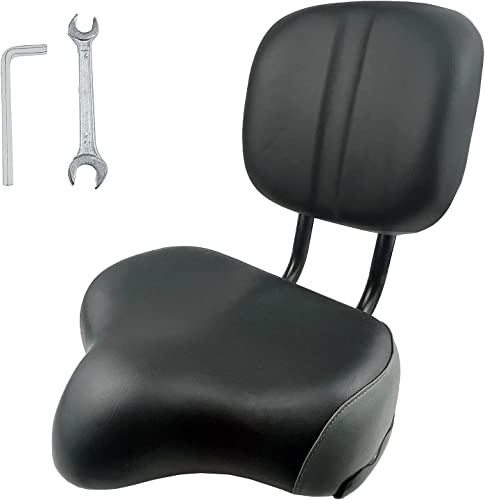
THALOUS provides a dual-focus design: a padded memory foam seat with a backrest for extra lumbar support. The backrest is adjustable to accommodate different rider heights and preferences, and the seatpost compatibility is emphasized to ensure proper installation on most standard posts without clamps. The cushion’s dimensions and weight are listed for careful measurement prior to purchase. The combination of memory foam and a supportive backrest makes it suitable for longer trips on electric or traditional bikes, reducing fatigue on the glutes and lower back.
BLUEWIND Noseless With Backrest

Bluewind’s noseless model with a backrest combines a large 13 by 9 inch seating area with an adjustable, user-friendly backrest. The nose-less design minimizes inner thigh contact and friction while the backrest provides tail support and optional height adjustments. The cushion employs a memory foam core with a durable, wear-resistant microfiber cover that stands up to daily riding and weather exposure. This configuration aims to suit riders who prefer a supportive back position on long electric-bike commutes.
Buying Guide: How To Choose The Right Bike Seat For Electric Bikes
Key considerations
- Seat width and shape: Look for a seat that offers a wide, concave surface to support sit bones and reduce thigh friction. A wider base helps stabilize posture on longer rides.
- Noseless vs backrest options: Noseless designs minimize pressure on the perineal area and inner thighs, but backrests can relieve lower-back strain on extended sessions. Consider your riding posture and preference.
- Padding and foam: Memory foam or high-density foam can adapt to your body and absorb road shocks. Thicker padding generally increases comfort on rough surfaces but may affect pedaling efficiency for some riders.
- Construction and materials: Durable, water-resistant covers (like microfiber) extend life and maintenance. Non-slip textures help the seat stay in place during vibration from an electric motor.
- Installation compatibility: Check rail post compatibility and any adapter requirements. Some seats are designed to be quickly swapped in and out in minutes with included tools.
- Rider size and riding goals: Consider maximum load rating, overall seat depth, and whether you need additional back support for daily commuting, fitness routines, or leisure rides.
Comparisons for different rider profiles
- Casual commuters: A wide noseless seat with a memory foam core often provides the best balance between comfort and ease of installation.
- Learners on electric bikes: A backrest option can help establish proper posture while the motor assist is used, reducing fatigue on the lower back.
- Riders with sensitive sit bones: A wide, stabilized concave base and additional padding may distribute weight more evenly, reducing localized pressure.
- All-terrain cyclists: A durable cover and strong base support with a longer lifespan under vibrations and varied surfaces.
Fit tips
- Measure your sit bone width and compare with seat width; a seat too narrow can cause discomfort over time.
- Test fit: If possible, try a trial swap on your bike to evaluate comfort during your typical ride duration.
- Track adjustments: Small adjustments in angle and saddle position can significantly impact comfort and pedaling efficiency.
Add a Comment