Balance boards can help seniors maintain stability, improve mobility, and support everyday activities. This guide reviews five well-suited options, highlighting design features, safety considerations, and how they accommodate older users. Each pick emphasizes non-slip surfaces, manageable weight, and reliable construction to support low-impact balance training and gentle core work.
| Product | Key Benefit | Weight Capacity |
|---|---|---|
| Amazon Basics Wood Wobble Balance Trainer Board | Solid wood top with non-slip surface for secure footing | Up to 265 lbs |
| StrongTek Professional Wooden Balance Board | 360° rotation with durable Lauan hardwood base | Up to 350 lbs |
| 3-in-1 Slant Board & 180°/360° Balance Board | Versatile, adjustable angles for progressive training | Up to 300 lbs |
| Balance Board Professional Wobble Board (Woodure) | Non-slip surface with high weight capacity | Up to 350 lbs |
| StrongPal Wooden Rocker Balance Board | Dual-direction wobble with 17° tilt for controlled movement | Up to 400 lbs |
Amazon Basics Wood Wobble Balance Trainer Board
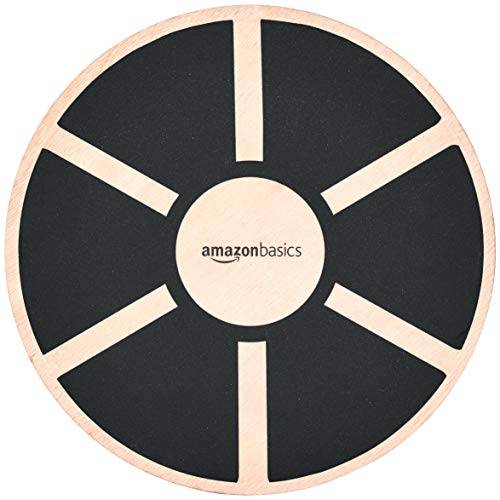
The Amazon Basics balance trainer features a solid wood top with a non-slip surface designed to support confidence during balance work. It is suitable for a range of exercises, including standing balance poses, planks, and controlled push-ups. The board is built to support up to 265 pounds, providing a sturdy platform for older users who require stable footing and reliable grip during routines. Its compact footprint makes it a practical option for home use, a standing desk setup, or a therapy corner.
Recommended use: gentle to moderate balance drills, posture-focused exercises, and core engagement routines. The wood finish and surface texture help minimize slipping, while the simple design reduces intimidation for seniors who are new to balance training. For safety, ensure a clear area and use with supervision during initial sessions.
StrongTek Professional Wooden Balance Board

This balance board offers 360° rotation thanks to a cross-shaped base, creating a more challenging yet controlled training option. It suits seniors seeking to improve core strength, stability, and coordination without resorting to high-impact moves. With a 17.5 x 13.5-inch surface and a nonslip base, it provides safety and comfort for shoulder-width stances. Its durable Lauan hardwood construction supports up to 350 pounds, indicating strong longevity for home or clinic use. The board’s rounded edges and firm grip help reduce scuffing on flooring while supporting gradual progression in balance tasks.
3-in-1 Slant Board & 180°/360° Balance Board
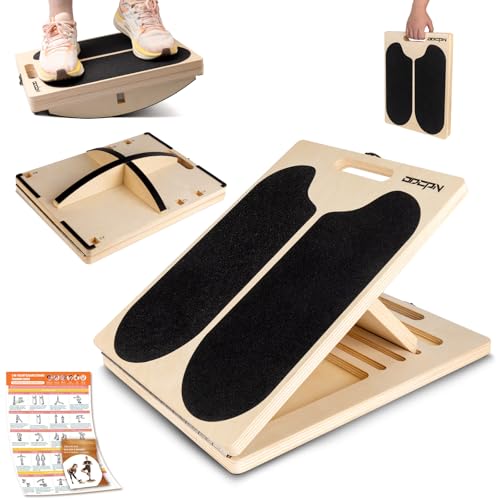
This versatile board combines a slant stance with 180° directional balance and full 360° rotation. It is crafted from 11-ply AA-grade poplar, offering a balance of durability and light weight (4.5 pounds) with a 300-pound capacity. The non-slip EVA base protects flooring, and the PVC sandpaper surface ensures steady footing. Six adjustable angles (20°–45°) support gradual progression from gentle stretches to more demanding balance challenges, making it a solid choice for seniors starting balance work or recovering from minor mobility issues.
Balance Board Professional Wobble Board (Woodure)

The Woodure balance board emphasizes stability and safety with an anti-slip surface and a robust 350-pound capacity. It is designed to support seniors with balance concerns by promoting proprioception, coordination, and core engagement through controlled wobble movements. The board’s construction focuses on durability and ease of use, enabling daily practice in a living area or home gym. This option can pair nicely with sit-to-stand routines, ankle-strengthening movements, and light standing balance sequences in a comfortable setting.
StrongPal Wooden Rocker Balance Board

The StrongPal rocker board provides a dual-direction wobble with a 17° tilt, enhancing balance and core strength while supporting up to 400 pounds. Its non-slip surface and compact 17″ x 13.4″ footprint make it a practical choice for seniors who prefer a smaller board with a clear range of motion. The design supports gentle, controlled movements that can improve stability for daily tasks, posture, and safe navigation on varied surfaces. Its portability makes it useful for home, office, or gym settings used in rehabilitation or routine fitness.
Buying Guide: Key Purchase Considerations
- Weight capacity and stability: Seniors may prefer boards rated well above their body weight and with proven non-slip surfaces to ensure secure footing during sessions. Look for anti-slip tops and bases that resist sliding on wood, tile, or carpet.
- Surface texture and grip: A lightly textured, non-slip surface helps prevent foot slippage while remaining comfortable for extended use. Avoid boards with overly abrasive surfaces that may irritate bare feet.
- Size and portability: Choose a board with a size that fits your space and body dimensions. Consider a lighter board for easy transport between rooms or for use near a standing desk.
- Adjustability and progression: For seniors, progressive difficulty is important. Boards offering multiple angles, rotation, or adjustable stoppers permit gradual increase in challenge as balance improves.
- Durability and materials: Solid wood and high-quality composites deliver durability and long-term value. Look for finishes that resist wear and minimize splinters or rough edges.
- Safety features: Non-slip feet, cushioned tops, and stable bases reduce fall risk. Some models include anti-slip pads or protective flooring interfaces to protect floors and provide quiet operation.
- Therapy and rehabilitation alignment: For older adults recovering from injury or managing chronic balance issues, consult with a healthcare professional to align board use with rehab goals and to determine appropriate intensity and frequency.
- Maintenance: Simple cleaning with a damp cloth and avoiding excessive moisture will prolong board life. Check for wear on the non-slip surface and replace if needed.
- Usage context: Consider where you’ll use the board—home living spaces, near a standing desk, or in a small gym area—to ensure there’s enough clearance for safe movement.
- Variety vs. consistency: A single board with upgradeable difficulty can be convenient, but a set offering different motions (slant, wobble, rotation) can better address multiple balance components and reduce monotony.
Overall, when selecting a balance board for seniors, prioritize stability, ease of use, and potential for gradual progression. Each option above provides distinct benefits, from simple wobble mechanics to advanced multi-directional rotation, enabling safe, meaningful training that can support daily activities and mobility.
Add a Comment