Finding the right balance bike for a 7-year-old helps develop balance, coordination, and confidence before transitioning to a pedal bike. This guide highlights popular 16-inch balance bikes designed for children roughly ages 5–8, with a focus on stability, adjustability, and durable construction. The selections below include no-pedal designs that promote balance first, making the move to pedals quicker and easier. Read on to compare features and find the best fit for your child’s size and riding style.
| Product | Brand | Key Features |
|---|---|---|
| Bixe Balance Bike – 16″ Green | Bixe | No pedals; designed for ages 5–9; tamper-proof clamps; durable wheels |
| Bicystar 16″ Balance Bike – White | bicystar | |
| Bicystar 16″ Balance Bike – Pink | bicystar | |
| Bicystar 16″ Balance Bike – Blue | bicystar | |
| Bueuwe 16″ Balance Bike – Black | Bueuwe |
Note: Each bike listed is a no-pedal design focused on balance and steering. All are appropriate for children around 5–8 years old and geared toward helping kids learn before moving to a standard pedal bike.
Bixe Balance Bike – 16″ Green

Designed for children from 5 to 9 years old, this balance bike helps kids learn balance and steering first, making a later transition to a pedal bike straightforward. The no-pedal design accelerates skill development, and the bike stresses secure and durable construction with tamper-proof clamps and washer-equipped wheels. It is a practical option for both boys and girls who are starting or needing support with balance.
Bicystar 16 Inch Balance Bike – White

With a lightweight 10.8 lb frame and adjustable seat (17–24 inches) and handlebars (25–28 inches), this balance bike supports ages 5–8. The no-pedal design helps children master balance quickly, often reducing the learning curve compared to training wheels. Quick-release adjustments accommodate growth spurts, while a low stand-over height makes mounting easier and safer.
Bicystar 16 Inch Balance Bike – Pink

This no-pedal bike features real rubber air tires to cushion bumps and steady turns, ideal for sidewalks and park paths. Adjustable seat (15″–22.6″) and handlebars (26.4″–29.1″) grow with your child, supporting heights typical of 5–8-year-olds. The rugged carbon steel frame is designed to support up to 110 lb, giving parents confidence during everyday rides.
Bicystar 16 Inch Balance Bike – Blue
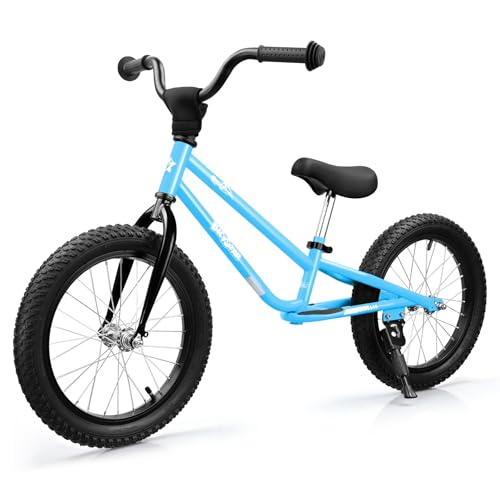
Similar to the white version, this bike offers an adjustable seat and handlebar fit, ensuring it grows with your child. Real rubber air tires provide a smoother ride, while the low stand-over height allows for confident, independent mounting. The bike’s sturdy construction is designed for daily use by children within the 5–8 age range.
Bueuwe 16 Inch Balance Bike – Black

The Bueuwe balance bike combines adjustable seat (45.5 cm to 57 cm) with a quick-release clip for easy size changes. The high-carbon steel frame supports up to 40 kg and 360° steering adds maneuverability. This option emphasizes a comfortable grip and smooth handling, helping kids build balance and confidence on two wheels before transitioning to pedals.
Buying Guide: Key Purchase Considerations
- Size and fit: For 7-year-olds, look for bikes with adjustable seats and handlebars to accommodate growth and ensure knee clearance and comfortable reach.
- Weight: A lighter frame eases handling and allows kids to learn balance faster. Aim for bikes around 10–11 pounds if possible.
- Safety features: Tamper-proof clamps, reliable wheel assemblies, and durable steel frames contribute to long-term safety and durability.
- Ride quality: Real rubber air tires provide better shock absorption and smoother steering compared to solid tires, especially on uneven surfaces.
- Transition readiness: A no-pedal design helps children focus on balance first, which can speed the move to pedals and improve confidence.
- Maintenance: Check for simple, tool-free adjustments, quality bearings, and easily replaceable parts to extend the bike’s life.
- Growth compatibility: Choose models with a broad height adjustment range to maximize years of use as your child grows.
- Terrain suitability: Consider where your child will ride most—sidewalks, driveways, or parks—and pick tires and ergonomics that suit that terrain.
All selections emphasize safe entry into cycling with a no-pedal design, but each bike has nuances in weight, adjustability, and tire type. Assess your child’s height, leg length, and confidence level to determine which model best aligns with learning pace and anticipated growth.
Add a Comment