The 223 case gauge is a precision tool for handloaders and reloaders who want to verify headspace, case length, and overall length before firing. This guide showcases five dependable gauges designed for .223 Remington and related calibers, focusing on accuracy, durability, and ease of use. Each entry includes a quick snapshot of key specs and how the gauge fits into a typical reloading workflow. Use the buying guide at the end to compare material, measurement capabilities, and usability across options.
| Product | Brand | Caliber Focus | Notes |
|---|---|---|---|
| Lyman 7832323 | Lyman | .223 | Case length and headspace gauge |
| Hornady 380707 | Hornady | .223 REM | SAAMI-tolerances, cylindrical steel gauge |
| Lyman 7833020 | Lyman | .223 Remington | Single caliber ammo checker |
| L.E. Wilson CG-223R | L.E. Wilson | .223 Rem | Classic case gauge with min/max |
| The Shooters Box | The Shooters Box | .223 Rem | Patented tri-step headspace gauge |
Lyman 7832323 Reloading 223 Case Gauge
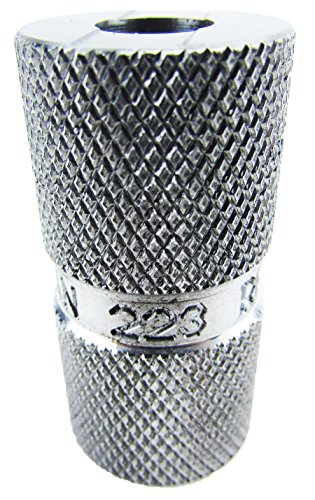
The Lyman 7832323 gauge is designed to check both case length and headspace for .223 caliber brass. While the product listing highlights Country of Origin (China) and color options (Gray or Silver), the gauge is primarily valued for its straightforward measurements. Reloaders can insert a case to confirm whether it sits flush with the back or indicates a need for trimming or resizing. Ideal for incremental checks during case prep, this gauge supports quick validation before formatting or seating primers and projectiles.
Hornady Lock-N-Load 223 Gauge

Hornady’s Lock-N-Load cartridge gauge is a compact, carbon steel tool designed to check cases and ammo to fit SAAMI chambers. The gauge exposes headspace by showing whether the case head sits flush with the back of the gauge, with a groove that helps indicate maximum and minimum headspace. This gauge is well-suited for rapid verification during loading sessions, especially when switching between calibers. It supports reloader workflows that need fast, repeatable checks to prevent oversizing or undersizing brass.
Lyman 7833020 Ammo Checker .223 Remington

The Lyman 7833020 is a single-caliber ammo checker intended for .223 Remington. Product dimensions are listed as 3.5 cm by 4.4 cm by 17.1 cm, reflecting a compact tool suitable for a loading bench. The design focuses on quick presence checks rather than full length measurement. This gauge is most helpful for verifying that a resized case will chamber properly, offering a concise, portable option for ensuring consistent dimensions during prep and test loads.
NJE 223/308/9mm Gauge (223 Option)

NJE offers a gauge option that includes multiple caliber choices, including 223, 308, and 9 mm. The tool is described as a sturdy alloy steel gauge that is easy to use by simply inserting a clean, resized case. This multi-caliber approach makes it attractive for reloaders who work with several calibers, enabling quick cross-checks across different cartridge sizes without swapping gauges mid-session.
L.E. Wilson CG-223R Remington Case Gage

L.E. Wilson’s CG-223R is a classic, one-piece case gauge designed to check overall length and indicate min/max case length, while also measuring min/max headspace. The Wilson name carries a long history in reloading tools, and this gauge reflects that legacy with a focus on precision checks during case preparation and verification. It does not measure body diameters but remains a staple for those who value established gauges and durability backed by a long-standing manufacturer.
The Shooters Box 223 Remington Gauge

The Shooters Box offers a patented tri-step face design for the 223 Remington gauge, providing measurement steps to assess headspace, maximum case length, and minimum case length. Manufactured in Malden, Massachusetts, this gauge emphasizes domestic production and a design that helps reloaders quickly determine whether a cartridge sits within SAAMI tolerances. The tri-step face aids in visual judgments of fit, supporting efficient screening of loaded ammunition and brass prep results.
Buying Guide: Key Considerations When Choosing a 223 Case Gauge
- Measurement capabilities: Decide whether you need headspace checks, overall length, maximum/minimum case length, or multi-caliber options. Some gauges emphasize headspace verification, while others provide a broader set of measurements.
- Caliber coverage: If you reload multiple calibers, consider gauges that include adaptable or multi-caliber options. However, dedicated single-caliber gauges can offer higher precision for a specific cartridge like .223 Remington.
- Construction material: Gauge bodies are typically carbon steel or alloy steel. Carbon steel gauges tend to be durable and precise but may require maintenance to prevent corrosion.
- Ease of use: Look for gauges with clear alignment cues, flush seating indicators, and intuitive design to speed up batch processing and reduce check errors.
- Portability and bench setup: Consider the size and weight of the gauge for portable use on outdoor benches or in compact reloading setups.
- Manufacturer history and support: Well-known brands (Lyman, Hornady, L.E. Wilson) offer established tolerances, documentation, and replacement parts, which can be valuable for long-term use.
- Domestic vs. imported: Domestic-made gauges may appeal to buyers prioritizing local production and support, as seen with The Shooters Box’s U.S. manufacturing notes.
- Price-to-value: While not listing prices, evaluate whether the gauge offers essential measurements and build quality appropriate for your reloading workflow and frequency of use.
In summary, selecting a 223 case gauge depends on your preferred measurement capabilities, whether you want a single-caliber focus or a multi-caliber option, and how you balance tradition with modern design. Each model in this guide provides robust options for verifying headspace and case dimensions, helping to ensure safer and more reliable reloads when used as part of a careful reloading process.
Add a Comment